Archive | Africa

Leading candidate in Egypt presidential race calls ‘Israel’ peace accord ‘dead and buried’

NOVANEWS

By: Mark Glenn

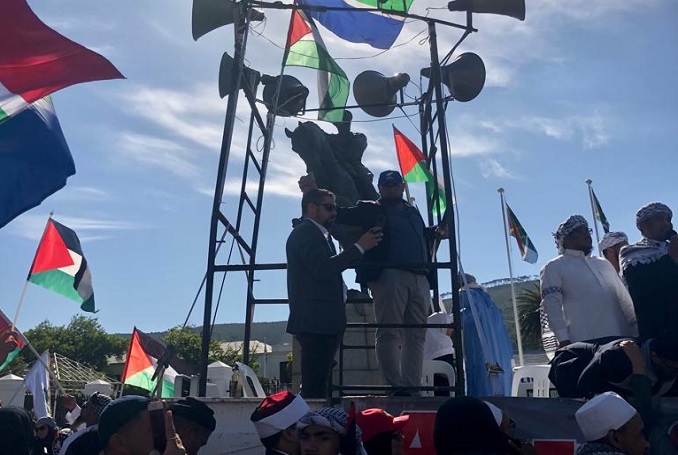
Amr Moussa tells a mass rally in south Egypt that the Camp David Accords with Israel should be ‘consigned to the shelves of history.’

ed note–as much as this  may sound like a good idea to many people throughout the Middle East, and particularly to Egyptians, the fact is that this is EXACTLY what Israel wants in order to initiate a war with Egypt that will result in Israel re-conquering and straling the Sinai peninsula.  

Haaretz

The leading candidate in Egypt’s presidential race said on Sunday that the Camp David Accords should be consigned to the shelves of history, describing the agreement as “dead and buried.”

At a mass rally in southern Egypt, Amr Moussa, who is currently ahead in Egypt’s race for president, spoke of the peace agreement between Israel and Egypt, saying that “the Camp David Accords are a historical document whose place is on the shelves of history, as its articles talk about the fact that the aim of the agreement is to establish an independent Palestinian state.”

Moussa went on to say that there is “no such thing” as the Camp David agreement.   “This agreement is dead and buried. There is an agreement between Israel and Egypt that we will honor as long as Israel honors it. The Jewish document that defines relations between Israel and the Arabs is an Arab initiative from 2002 whose advancement should be bilateral: step for step, progress for progress.”

Moussa, who served for ten years as foreign minister under former president Hosni Mubarak (and left his post over disagreements with the former leader), differentitaties between the Camp David Accords, which include the Palestinian articles, and the peace treaty between Israel and Egypt. The Egyptian public does not necessarily make the same differentiation, however. The Camp David Accords are seen as one whole, and all public discussions of them are seen as a test of the foreign policy that is expected of Egypt’s presidential candidates, and mainly code according to which U.S. policy towards each one of the candidates will be decided.

In a visit to the west of Egypt two weeks ago, Moussa described the agreement as “ink on paper whose period of authority is over,” without differentiating between the articles that deal with the Palestinians, and those that deal with peace with Israel. Although Moussa is leaning on the support of some of the secular parties and activist groups that were the backbone of the January revolution, it is actually Islamist leaders that are talking about their commitment to the Camp David Accords.

The head of Salafi Al-Nour party, for example, said in December last year that his movement is not opposed to the Camp David Accords, and that it is ready to negotiate with Israel. Representatives of the Muslim Brotherhood movement, including Khairat Al-Shater, who until recently was their candidate for president, also emphasized their commitment to the Camp David Accords, and have passed on this sentiment to the U.S. administration.

Moussa, despite this, has followed a tough line on Israel for years. He designed Egypt’s foreign policy regarding Israel’s nuclear capabilities, a policy that calls for nuclear disarmament in the region, and he is particularly proud of his part in putting the Palestinian problem on the international list of priorities during his time as foreign minister.

Despite these views, 76-year-old Moussa says that – if elected – he will only serve one term as Egyptian president, a criticism that has come from those who are meant to be his supporters. One member of the Al Wafd party, for example, said that Moussa is the number one choice of the U.S., and that “even Israel does not express its worry that over his election. He announced his intention to stand for election as Egypt’s president from the house of the Saudi ambassador in Egypt, and no one knows are his sources of funding.”

Posted in Egypt0 Comments

Israel’s latest security obsession

NOVANEWS

Dr. Daud Abdullah

Egypt has changed dramatically, it is true, but the process has only just begun.Egypt has changed dramatically, it is true, but the process has only just begun.

As Israelis celebrate the 64th anniversary of the creation of their state in the land of historic Palestine, officials are warning of a new security threat. This, it seems, is not the bogey of Iranian nuclear weapons, but neighbouring Egypt, Israel’s long-time ally. The recent decision by the Egyptian authorities to stop the export of natural gas at preferential rates to Israel underlines both the tensions and transformation in relations between the two countries. 

In 2005, the ousted Mubarak regime signed a twenty-year agreement for the export of natural gas to Israel for a price ranging between seventy cents to $1.5 per million thermal units. The current price for the commodity on the world market is $5 per million thermal units. The people of Egypt are, understandably, angered deeply by this misappropriation of a vital national resource, especially because 50 per cent of the country’s 85 million population live below the poverty line.

Many believed the former Egyptian dictator gave this mind-boggling concession to Israel in order to curry favour with the Americans and win their support for the transfer of the presidency to his son, Jamal. Moreover, since Mubarak’s overthrow in February 2011, the pipeline conveying the gas to Israel has been blown up 15 times in the North Sinai region.

Although the abrogation of the export deal was linked to popular protest, there may yet be other reasons forthcoming. Egyptian analysts believe that the timing was linked to an attempt by the military hierarchy to pre-empt any investigation by a new civilian government into the mismanagement of the national economy by the previous regime. Whatever the case, the decision suggests that Egypt is emerging from its political coma and is now on a trajectory to resume its natural leadership role in the region. Under Mubarak, the virtual giveaway of Egypt’s natural gas to Israel while besieged Gaza was kept in the cold and dark was seen as patently unpatriotic and, indeed, treacherous.

Despite their best efforts to minimise the importance Egypt’s decision, none can deny that it came as a blow to the Israelis. The issue of “energy security” was discussed at the 12th Herzilya conference in January. A paper was presented by Ori Slonim with the title, “The gas findings and Israel’s future energy security”; it generated an intense debate on how to secure and diversify gas supplies, particularly in the Levant Basin, which has an area of 83,000 square kilometers, and includes Lebanon, Syria, Cyprus and the Gaza Strip. A US geological survey estimates that this basin holds 1.7 billion barrels of extractable oil, and 122 trillion cubic feet of natural gas. Tapping into this source, however, may prove to be even more problematic than the termination of the Egyptian supply.

Egypt’s transition from dictatorship to democracy has been viewed with scepticism in Israel. The unarguable popularity of the Islamic parties has been extremely disturbing for many Israelis, who fear that this will be translated into greater support for the Palestinians, not least the besieged population in the Gaza Strip.

Immediately after Mubarak’s ousting, Israeli Prime Minister Benjamin Netanyahu ordered the construction of a wall along the border with Egypt to be speeded up. More recently, he also ordered the deployment of Special Forces to the area, comparing the Sinai to the American wild west. This bellicose rhetoric did not go down well in Cairo, and the leader of the military council, Muhammad Hussein Tantawi, was obliged to issue a strong warning against any infringement of Egypt’s sovereign territory.

Israeli Foreign Minister Avigdor Lieberman is reported to have sent a note to the Prime Minister pointing out the possible dangers from the changes taking place in Egypt. In a closed meeting, he claimed the issue of Egypt is more worrying than any threat from Iran. From the Egyptian perspective, though, Israel’s so-called security concerns are driven by a broader political agenda.

If the Israeli establishment hoped that their “concerns” over security were going to deliver political concessions from Egypt, they were mistaken. Former General and Knesset member Benjamin Ben Elizier welcomed the proposed candidacy of former intelligence chief Omar Sulaiman for Egyptian president. His untimely remarks sent alarm bells ringing in Cairo and, following widespread protest, the electoral commission disqualified Sulaiman. Ben-Elizier was not the only high profile Israeli to support Sulaiman’s bid; Deputy Prime Minister Silvan Shalom also believed Sulaiman’s candidacy to be a positive development.

Thus, the current hysteria about the “security threat” from Egypt has to be seen as part of a rear-guard effort to salvage as much as possible from the defunct regime and secure Israel’s energy, economic and political interests. Given the existing tensions, Israel is now left with no other option but to play the American card and ask Washington to put pressure on Egypt. US Secretary of State Hillary Clinton has already indicated that she is ever ready to oblige. At the Munich Security Conference in February, she threatened to cut aid to Egypt, which now stands at $250 million a year in economic aid and $1.5 billion annually for the military.

Egypt has changed dramatically, it is true, but the process has only just begun. With the military council still very much in charge, the coming weeks will see an intensification of calls for a faster and more complete transition to civilian rule. Whether these changes please Israel or not appears to be irrelevant for the Egyptians, and we can expect the Israelis and their supporters to cry wolf for the foreseeable future. Cairo, meanwhile, will begin to put its own interests ahead of Israel’s, as any responsible government should; not, it has to be said, before time.

Posted in Egypt1 Comment

خبراء يصفون قرار السعودية بإغلاق سفارتها بأنه “سياسى مؤسف” وتصعيد قوى.. وتوقعات باتخاذ إجراء ضد الجيزاوى خلال الأيام المقبلة.. ويستبعدون تعرض المصريين الموجودين هناك لأى ضرر

Posted By: Siba bizri

Arabic Shoah editor in Chief

المفكر السياسى الدكتور مصطفى الفقى

المفكر السياسى الدكتور مصطفى الفقى

سماح عبد الحميد –  اليوم السابع

وصف المفكر السياسى الدكتور مصطفى الفقى، القرار الذى اتخذته السعودية بإغلاق سفارتها فى مصر وسحب السفير بأنه مؤسف ويعبر عن حالة من حالات التصعيد من الجانب السعودى.

وأضاف الفقى لـ”اليوم السابع” أنه يجب محاولة تهدئة الأوضاع والحفاظ على العلاقات بين البلدين خاصة وأن لدينا ما يتجاوز المليون مصرى فى السعودية.

واستبعد الفقى تماما أن يتم اتخاذ أى إجراءات ضد المصريين الموجودين فى السعودية الآن، لافتا إلى أنه لا يجب الخلط بين قضية الجيزاوى ووضع المصريين هناك خاصة وأن أكثر من مليون مصرى يعملون ويعيشون هناك منذ سنوات لا يشكون من أى شىء وبالتالى فإن عملية التعميم والإثارة والتحريض التى حدثت لم تكن صحيحة أو مطلوبة على الإطلاق.

وأضاف الفقى قائلا “نأمل فى حكمة البلدين وقياداتهم فى احتواء الموقف لأن العلاقات المصرية السعودية حساسة بطبيعتها وتطورت بشكل إيجابى خلال السنوات الماضية ويجب أن نحافظ على ذلك”، موضحا أنه بالنسبة لأزمة الجيزاوى يجب أن يتم فيها احترام أى قرار يصدر من القضاء السعودى، مشيرا إلى أنه يجب أن يتم احترام قضاء كلا البلدين وعدم اللجوء إلى التراشق الإعلامى فى الفضائيات والذى أدى من وجهة نظره إلى تصعيد الأمر إلى هذا الحد السيئ الآن.

فى حين وصف السفير محمود شكرى مساعد وزير الخارجية السابق القرار الذى اتخذته السعودية بأنه قرار سياسى مؤسف ضد المظاهرات التى تعتبر نوعا من الاحتجاج الشعبى، لافتا إلى أنهم اتخذوا هذا الإجراء كنوع من الحماية والتأمين لسفارتهم الموجودة فى مصر خاصة فى ظل حدة المظاهرات التى نظمت ضدهم والألفاظ التى تم استخدماها واعتبر أن بها تجاوز ضد الذات الملكية السعودية.

وتوقع شكرى بأن السعودية ستصعد الأمور خلال الأيام المقبلة فى قضية المواطن المصرى أحمد الجيزاوى، مشيرا إلى أنه من الممكن أن يتم اتخاذ إجراء ضده ولذلك سبقت بإغلاق السفارة وسحب السفير تحسبا لأى احتجاجات يمكن أن تحدث.

وأضاف أن التخوف الحقيقى الآن هو من توتر العلاقات بين البلدين بما يؤثر بشكل سلبى على المصريين الموجودين فى السعودية لافتا إلى أنه فى حالة اتخاذ أى إجراءات ضد العمالة المصرية هناك فإن ذلك سيؤدى إلى توتر العلاقات بشكل كبير جدا بين البلدين.

وقال شكرى إنه لا يفضل تماما التصعيد من الجانب المصرى الآن لافتا إلى أنه يجب أن يتم اللجوء للحل الدبلوماسى بشكل رئيسى وبالنسبة لقضية الجيزاوى لا يوجد أمامنا سوى التعامل القضائى معها حتى لا نزيد من حدة التوتر.

وطالب بأن يتم تأمين السفارة بشكل جيد جدا ضد أى احتجاجات شعبية ومظاهرات تحدث فى مصر ضد السعودية.

Posted in Arabic, Egypt0 Comments

عمرو موسى.. تاريخ من المواجهات مع الاسرائيليين

Posted By: Siba Bizri

Arabic Shoah editor in Chief

معاريف 27/4/2012

عمرو موسى وان كان لا يزال لم ينتخب رئيسا لمصر الا ان السياسة المناهضة لاسرائيل المعلنة لديه تحتل منذ الان مكانا محترما في السياسة المصرية. في بداية الاسبوع أعلنت الحكومة المصرية المؤقتة عن الغائها اتفاق الغاز بين اسرائيل ومصر. وهكذا حققت أحد البنود في برنامج موسى السياسي وهو الذي كان وزير الخارجية المصري والامين العام للجامعة العربية ويعتبر الان المتنافس المتصدر في السباق للرئاسة المصرية والذي يعنى باعادة النظر لاتفاق الغاز بين الدولتين. ‘اذا انتخب موسى رئيسا فقد يستخدم ضدنا وسائل لم نرها بعد’، يقول البروفيسور يورام ميتال من جامعة بن غوريون. ‘من ناحيته، اتفاق السلام بين اسرائيل ومصر ليس أمرا مقدسا ويمكن ادخال تعديلات فيه كالتواجد الامني في سيناء. وهو كفيل بان يوجه انتقادا حادا ومستمرا لاسرائيل في كل ما يتعلق بالموضوع الفلسطيني، يخفض مستوى العلاقات وينقل مساعدة مدنية لحماس في قطاع غزة، الامر الذي لم نره من قبل’.
لموسى، 76 سنة، يوجد تاريخ طويل من الصدامات مع اسرائيل. علاقاته باسرائيل كانت كفاحية جدا لدرجة ان دافيد ليفي وصفه بانه الرامبو المصري. موسى، كما تجدر الاشارة، لم يخفِ ابدا عداءه لاسرائيل. وقد قال ان موظفي وزارة الخارجية الاسرائيلية يعانون من تخلف عقلي ومجنون فقط أو جاهل يؤمن بالسلام مع اسرائيل. وقد اتهم دولة اسرائيل بالعمليات التي قتل فيها اسرائيليون، ادعى بانه لا يمكن الثقة ببنيامين نتنياهو، سخر من شمعون بيرس، ودعا الى مقاطعة ارئيل شارون.

‘استخباراتكم ليست ذكية جدا’، قال للصحفيين الاسرائيليين في المؤتمر الاقتصادي في دافوس. ليس هذا فقط. بل ان موسى تساءل بصوت عال لماذا لا ينبغي ان يكون لايران قنبلة ذرية. ‘لماذا نوقفهم؟’، سأل في مؤتمر في لندن. في أعقاب أحداث اسطول مرمرة قال موسى ان اسرائيل هي السبب في الثقب الاسود في المنطقة وأعلن بان اتفاق السلام بين اسرائيل ومصر والذي وقع في كامب ديفيد لم يعد ذي صلة في عصرنا، بعد التغييرات التي مرت بهامصر.

وحتى من يميل الى الاتفاق مع موسى على طريقة حل سياسي يتضمن تنازلا عن القدس وعودة الى خطوط 67، يصعب عليه أن يقبل اسلوبه. ‘صعبة عليه اسرائيل’، يقول يوسي بيلين، الذي يعرف موسى جيدا. ‘صعب عليه التطبيع الكامل. فهو انسان مرير بطبعه، وبعض من هذه المرارة موجهة لاسرائيل’. البروفيسور ايتمار رابينوفتش، الذي عرف موسى عندما كان سفيرا لاسرائيل في الولايات المتحدة، يضيف ‘بانه أقام معنا حوارا ونقاشا، ولكنه عرف كيف يكون جد حازم وبالتالي ليس لطيفا أيضا’.

تاريخ من المواجهات

‘الحوار مع موسى لم يكن سهلا دوما’، يتذكر دافيد سلطان الذي كان سفير اسرائيل في مصر. ‘فهو يتمتع بسرعة بداهة ولغة. جوابه جاهز على لسانه حتى قبل ان تنتهي من طرح السؤال. في اتصالاته مع اسرائيل كان هو الذي فاقم غير مرة المشاكل بين الدولتين. أحد سفراء الولايات المتحدة في مصر اشتبهبه بانه حتى لا يريد أن يدفع العلاقات مع اسرائيل الى الامام’. 

السفير السابق، البروفيسور شمعون شمير، يقول ان موسى وان كان ‘شخصا كفؤ، سياسيا ودبلوماسيا ممتازا، ولكنه لا يستطيب اسرائيل على نحو خاص’. تسفي مزال، الذي عمل هو ايضا كسفير في مصر يضيف بان ‘شعبيته نبعت من مواقفه المتصلبة تجاه اسرائيل. فقد كان هو الذي الى جانبالرئيس مبارك قرر ان يكون السلام مع اسرائيل سلاما باردا’. 

في الايام الاخيرة تتصاعد قوة موسى في الاستطلاعات قبيل الانتخابات للرئاسة المصرية والتي ستعقد في نهاية ايار. في الاسبوع الماضي رفضت لجنة الانتخابات العليا في مصر ثلاثة مرشحين كبار: عمر سليمان، نائب الرئيس المصري السابق، خيرت الشاطر، ممثل الاخوان المسلمين وحازم ابو اسماعيل، مرشح السلفيين. ومن بين المرشحين الـ 13 للرئاسة، يعتبر موسى المرشح المتصدر. 

العطف الذي يحظى به موسى ليس مفاجئا. ففي العام 2004 نشرت على الانترنت عريضة تدعو موسى الى التنافس في الانتخابات للرئاسة. عشرات الالاف وقعوا عليها. ‘بعد شهرين من سقوط مبارك بدأ موسى حملته الانتخابية للرئاسة’، يقول البروفيسور ميتال. ‘فقد توجه للشباب، لليبراليين، للمؤسسة الرسمية، لعديمي الانتماء الحزبي، للاسلاميين الذين لا يؤيدون احزابا اسلامية. للاغلبية الساحقة من المجتمع. برنامجه يشدد على مكافحة الفقر، على الغاء جهاز الامن الداخلي وعلى اعادة الامن الشخصي. وهو يركز في المواضيع الداخلية. بعد أن ينتخب ستطرح مواضع الخارجية وعلى رأسها المشكلةالفلسطينية’.

موسى، متزوج وأب لاثنين، محام ، تربى في عائلة غنية في القاهرة. وهو مسلم علماني، تعلم القانون في جامعة القاهرة وعمل لفترة قصيرة كمحام. في نهاية سنوات الخمسين انضم الى السلك الدبلوماسي المصري وأدى سلسلة من المناصب. فقد كان مدير دائرة العلاقات الدولية، سفير مصر في الهند،عضو في الوفد المصري الى الامم المتحدة في نيويورك وسفير مصر في الامم المتحدة.

في العام 1991 عين في منصب وزير الخارجية وامتنع على مدى فترة طويلة عن زيارة اسرائيل. وعندما وصل في زيارة قصيرة في آب 1994 رفض زيارة مؤسسة ‘يد واسم’ للكارثة والبطولة بدعوى أن اسرائيل تفرض عليه جدولا زمنيا لا يروق له. ‘الزيارة كانت عاجلة’، حاول ان يبرر رفضه في مقابلة صحافية، بعد ثلاثة اشهر من الحادثة الدبلوماسية، ‘وفجأة جاءوا وقالوا لي انك ملزم بزيارة ‘يد واسم’. هذا هو الامر الاهم في زيارتك. هذا أثار جنوني. بدلا من أن يتفق الطرفان على التفاصيل انتم تحاولون فرض شيء ما عليه. لا تحاولوا ان تفرضوا علينا شيئا. بدلا من ذلك تحدثوا الينا’. ووافق موسى على أن يزور فقط موقع التخليد للاطفال في ‘يد واسم’ وليس في كل الموقع، ولكنه رفض وضع اكليل واعتمار قبعة دينية. ‘فقد خاف أساس من صوره معالقبعة الدينية في ‘يد واسم’، يشرح بيلين، ‘أنا أفترض بان مثل هذه الصورة كانت اليوم ستحطم له فرصته لان ينتخب رئيسا’. 

الزيارة الى اسرائيل والتي بدأت بجدال كان في أساسه طقسيا، انتهى بجدال مبدئي أكثر. على مدى ولايته كوزير للخارجية، طالب موسى اسرائيل بالانضمام الى ميثاق منع نشر السلاح النووي، وهكذا شمل اسرائيل مع ايران في مسألة النووي وقال انه اذا كانت لاسرائيل تطلعات نووية، فلا يوجد ما يمنع الا يكون لايران تطلعات كهذه. ‘لا يمكن تحقيق السلام في المنطقة دون رقابة نووية’، قال في مؤتمر صحفي في نهاية زيارته القصيرة الى اسرائيل.
‘لقد كان عدوا صعبا جدا لاسرائيل في كل اللجان التي عنيت بالموضوع النووي’، يتذكر تسفي مزال. ‘روح غير طيبة تهب في وزارة الخارجية المصرية’، قال اسحق رابين في 1995، بعد جدال آخر مع موسى في الموضوع النووي.
‘موسى هو مناهض لاسرائيل في كثر من المجالات، هذا ليس الامر الوحيد’، يروي عوزي عيلام، الذي كان مديرا عاما للجنة الطاقة الذرية. ‘في المجال النووي كان بوقا للسياسة المصرية. الرئيسا مبارك والسادات طالبا ايضا بتجريد الشرق الاوسط من السلاح النووي، وان لم يكونا على هذا القدر منالحدة مثل موسى’.

الحدة التي اشار اليها عيلام لم تكن دبلوماسية كما يمكن التوقع من وزير الخارجية. مسؤول كبير في وزارة الخارجية يتذكر حديثا موضوعيا بل وحتى أديبا مع موسى، ولكن تصريحاته تجاه المسؤولين الاسرائيليين ودولة اسرائيل بقيت قاسية وفظة. موسى وصف شمعون بيرس ‘بالثرثار’، ارئيل شارون ‘بالخرقة الحمراء’، قال انه لا يصدق السياسيين الاسرائيليين وشن حربا حادة ضد حكومة نتنياهو في الولاية الاولى. ‘نتنياهو يهدم السلام’، هاجم موسى في مقابلة في 1996. ‘لا يمكن الثقة بنتنياهو، فهو يخدع الجميع، بما في ذلك الرأي العام الاسرائيلي’، قال لاسرائيليين وصلوا في زيارة الى مصر فيتموز 1997 وهاجم ايهود باراك بصورة مشابهة: ‘باراك طعن المسيرة السلمية في الظهر’. 

كأمين عام للجامعة العربية هاجم شارون في كل فرصة وقال انه مع شارون كرئيس للوزراء لا يتوقع تقدما في اتجاه السلام. في 2003 بعد العمليات في الكنس في اسطنبول قال ان تجاهل العدوان المستمر لاسرائيل سيوقع ضحايا مدنيين آخرين وطلب من العرب الا يشجبوا الهجمات على المدنيين الاسرائيليين. ‘اسرائيل لا بد ستذوق ضربات الفلسطينيين اذا واصلت احتلال المناطق العربية’، حذر. وأعرب موسى في الماضي عدة مرات عن تأييده للانتفاضة وكان شريكا في دعوة الجامعة العربية الى قطع العلاقات مع اسرائيل الى أن توقف أعمالها العدوانية. في مؤتمر الحاصلين على جائزة نوبل في الاردن في 2008 صرف موسى النار نحو بيرس حين قال انه ‘فنان في الاقوال واسرائيل فقط تطلق تصريحات السلام’. 

‘موسى هو رجل مركب، ذكي جدا، متهكم’، يقول يوسي بيلين. ‘لديه دافع ايديولوجي وفهم عميق في موضوع الوحدة العربية والعالم العربي، والذي هو فهم ناصري في جوهره. من جهة هو متصلب ومرير تجاه اسرائيل وبعض من العطف عليه في مصر ينبع من تحفظاته تجاه اسرائيل، ومن جهة اخرى، يمكن الحديث معه والوصول معه الى تفاهم. فهو برغماتي جدا، يعرف العالم ويعرف أمريكا جيدا. اذا كان رئيسا، سينجح في ادخال مصر الى النادي العالمي. وهو يعرف زعماء العالم وهم سيتنفسون الصعداء اذا ما انتخب رئيسا. اذا ما انتخب موسى رئيسا سيحافظ على السلام، ولكنه لن يشجع التعاونطالما لم يكن سلام مع الفلسطينيين. لا تنتظر اسرائيل مفاجآت خاصة أو خيبات أمل. نحن نعرفه ونعرف من هو’. 

بيلين يعرف موسى منذ 22 سنة. ‘صديق مشترك عرفنا على بعضنا البعض عندما كان سفيرا في الامم المتحدة وأنا نائبا لوزير الخارجية. قالوا عنه انه مرشح للعظمة وبالفعل بعد وقت غير بعيد أصبح وزيرا للخارجية. واصلنا اللقاء حتى بعد أن اصبح امينا عاما للجامعة العربية، وان لم يكن في مكتبه. فقد اعتقد بان هذا ليس مناسبا ان يلتقي امين عام الجامعة العربية مع اسرائيليين في مكتب الجامعة في القاهرة. لم يكن شخصا حميما، لا يخلق صداقات ولديه الكثير من الانتقادات على اسرائيل. من جهة اخرى، يفهم المزايا الاستراتيجية لمصر منذ اتفاق السلام’.

‘في احدى الاغاني الشعبية في مصر يوجد بيت يقول: ‘أنا أكره اسرائيل واحب عمرو موسى’، يقول البروفيسور شمير. ‘هذا يعبر عن موقفه من اسرائيل وعن الشكل الذي ينظر فيه في مصر تجاه هذا الموقف. فهو معاد لاسرائيل، ولكنه يفهم مصالح مصر. وهو ينتمي الى جيل مبارك الذي احاط نفسه باناسبرغماتيين يعرفون العالم’.

‘هو يرى في اسرائيل خصما وليس عدوا’، يشرح البروفيسور ربينوفتش. ‘لقد كان شريكا صعبا للمسيرة السلمية. اراد لاسرائيل ان تخرج من المسيرة السلمية كدولة تقف على قدميها، ولكن الا تنافس مصر على الهيمنة في المنطقة. خشي أن تنتهي المسيرة السلمية في أن تكون اسرائيل دولة ذات نفوذ كبير. خاف أن تكون اسرائيل تتخلى عن المناطق ولكنها تشتري الهيمنة في المنطقة. كما أنه محظور النسيان لموقفه بالنسبة للنووي. فمن شأنه أن يؤيدخطا ايرانيا يعارض النووي الاسرائيلي’.

‘جولة الانتخابات الثانية ستكون شديدة على نحو خاص’، يتوقع البروفيسور ميتال. ‘من الصعب الافتراض انه سيحظى بأكثر من نصف الاصوات في الجولة الاولى وسيصعد الى الجولة الثانية فيما يتحد ضده كل المعسكر الاسلامي. اذا صار رئيسا، فان موقفه الانتقادي تجاه اسرائيل سيكون الموقف الرسمي لمصر. المعنى هو الكثير جدا من الضغط على اسرائيل وقد يكون هذا حرجا في حالة أزمة اخرى بين اسرائيل والفلسطينيين. ومع نتنياهو سيتعامل كرئيس وزراء اسرائيل وليس كصديق له. لا تتوقعوا منه علاقات حميمة بينهما’.


Posted in Africa, Arabic, Egypt0 Comments

Islamists’ Fortunes Fade Before Egypt Vote

NOVANEWS
By MATT BRADLEY

CAIRO—The runaway victory that Egyptian voters handed to Islamist parties in recent parliamentary elections is looking increasingly Pyrrhic.

The Muslim Brotherhood and the Nour Party, which identifies with the hard-line Salafi school of Islam, captured more than two-thirds of the seats in Egypt’s Parliament. But in the three months since, they have been largely ineffective. In recent weeks, the parties have faced mounting public criticism, internal defections and weakening prospects in next month’s presidential vote.

ReutersA vendor sells images of Egyptian presidential candidates, among others, on Thursday, a day when Egypt’s election commission released its final list of 13 presidential candidates.

While Egyptian political polls are subject to broad skepticism, one conducted late last month indicates how far Islamist politicians’ public star has fallen: The Al Ahram Center for Political and Strategic Studies, a government-owned think tank, found that 45% of people who voted for the Brotherhood’s Freedom and Justice Party in the parliamentary elections said they wouldn’t do so again. The FJP holds nearly 50% of the seats in Parliament.

Egyptian Islamists blame their fading fortunes on unreasonably high public expectations and what they say is a political system that is rigged against them. While the Islamists hold a broad majority of Parliament, they don’t control Egypt’s cabinet, as would generally be the case in parliamentary systems.

Brotherhood officials say the council of generals who are overseeing Egypt’s political transition have blocked parliamentary efforts to dismiss the military-appointed cabinet of ministers. The interim regime has also deliberately blocked legislation originating in the Parliament, they say, in what they call a bid to paint the Islamists as political failures.

The Brotherhood in Egypt

The government hasn’t publicly responded. Former Gen. Sameh Saif al-Yazal, who regularly consults with the leading generals, said that appointing a placeholder cabinet just a few months before Egypt’s scheduled transfer of power would be destabilizing.

Even weakened, Egypt’s Islamist parties remain a potent political force. The ground-level outreach of the Brotherhood and Salafis remains unrivaled by more liberal politicians, who are divided and unpopular.

The Islamists’ organized presence throughout Egypt helped them in parliamentary elections, where many voters, facing slates of largely unknown candidates, cast ballots based on familiar party names. The May 23 presidential polls, however, will hinge far more on candidates’ personalities than their party affiliations, political analysts say.

That could benefit more moderate, charismatic presidential candidates such as Amr Moussa, the former secretary-general of the Arab League, and Abdel Moneim Aboul Fotouh, a relatively liberal ex-Brotherhood leader.

Mr. Fotouh split with the organization last summer in a disagreement over the group’s promise not to nominate anyone for the presidency. The Brotherhood’s subsequent decision to run two presidential candidates has angered many voters, who saw the move as a power play.

Brotherhood officials say they decided to enter the race to fight what they call a calculated attempt by the military to strip the Parliament of political power.

“Because Parliament can’t do as much as people originally thought, the presidency has become much more of a prize,” said Shadi Hamid, the director of research at the Brookings Doha Center in Doha, Qatar.

That prize won’t go to the Brotherhood’s highest-profile candidate. Last week, an Egyptian judicial commission disqualified several candidates including Khairat al-Shater, a prominent financier and strategist within the Brotherhood organization who was the group’s first choice for president. Mr. Shater was excluded because of a prior fraud conviction, leaving the Brotherhood to lend its name and now-declining public stature to a lesser-known backup candidate, FJP Chairman Mohamed Morsi.

On Thursday, Egypt’s election commission released its final list of 13 candidates. The relative support levels for the remaining candidates remain unclear.

Egypt’s Islamists say their troubles are based in part on a constitutional declaration passed last year, with Islamist parties’ backing, that left most political authority with the council of military generals that took power from Hosni Mubarak when he stepped down from the presidency last year.

“It’s not an executive authority. It’s just a legislative authority with no power of implementing these laws and this legislation,” said Amr Al Makki, a Nour Party spokesman. “So the people, if they do not see any change or any implementation, they will not be happy.”

Even among Egypt’s profoundly religious electorate, voters appear to be holding religious parties responsible for accomplishing practical, worldly results to match their lofty religious rhetoric.

“The expectations are higher because they come from a religious background,” said Omar Ashour, the director of Middle East Studies at the University of Exeter, of the Islamist parties in Egypt’s parliament.

Similar dynamics are playing out in other Arab countries where a wave of successive pro-democracy uprisings last year yielded unprecedented victories for Islamist parties.

In Tunisia, the Al Nahda Party has recently faced criticism over its inability to rein in unemployment and inflation. Recent polls have shown declining public support for the party, which won about 40% of elections in October. In Libya, the role of religion in politics has also come to the fore: Religious parties have decried an apparent effort Wednesday by the country’s ruling National Transitional Council to ban religious-based parties.

Egypt’s parliament, meanwhile, stepped up its battle with the military on Tuesday, when it voted to reject an economic reform plan drafted by the military-appointed government—a move that could jeopardize negotiations for a $3.2 billion loan from the International Monetary Fund that is crucial to rescuing Egypt’s flagging economy.

Such a lack of effectiveness has led to disillusionment and infighting among lawmakers, some of whom appear to want to dissociate themselves from public scorn.

At least five parliamentarians resigned from the Salafi Nour Party recently, according to local Egyptian media. The party, which unlike the Brotherhood is not bound by a strict heirarchy or a unified ideology, has had difficulty maintaining internal discipline. While those who resigned cited multiple reasons, some said they were ashamed of the Islamists’ early political failures following their triumphant rise to power during the parliamentary elections.

“The performance of the FJP and Nour party was not living up to the magnitude of the revolution,” said Nezar Ghourab, a former Nour Party member from Giza, a Cairo suburb, who resigned this week.

Posted in Egypt0 Comments

FROM LIBYA TO SYRIA: “WAR IS A RACKET. IT ALWAYS HAS BEEN”

NOVANEWS
By James Corbett
International Forecaster
“War is a racket. It always has been.” These words are as true now as they were when Major General Smedley Butler first delivered them in a series of speeches in the 1930s. And he should have known. As one of the most decorated and celebrated marines in the history of the Corps, Butler drew on his own experiences around the globe to rail against the business interests that use the U.S. military as muscle men to protect their racket from perceived threats. From National City Bank interests in Haiti to United Fruit plantations in Honduras, from Standard Oil access to China to Brown Brothers operations in Nicaragua, Butler pointed out how intervention after intervention served the business interests of the well-connected even as American taxpayer money went to foot the bill for these adventures. The names and places may have changed, but the old adage holds: the more things change, the more they stay the same.


The National Transitional Council that is nominally in charge of what is left of Libya announced this week that they’re beginning a probe of foreign oil contracts brokered during Gaddafi’s reign by his son, Saif al-Islam. Libya is sitting on the largest oil reserves in Africa, and it is no coincidence that within weeks of the start of the NATO campaign last year the rebels had already secured the country’s oil ports and refineries on the Gulf of Sidra and established their own national oil company for negotiating contracts with the invading forces. Although the oil contract probes are supposedly meant to show the transparency of the new “government” and their willingness to root out the graft and kickbacks inherent in the old regime, it’s quietly acknowledged that the process will be used to reward the nations that most visibly supported last year’s invasions and punish those who were more reticent.


Surprising, then, that the first companies on the block are Italy’s Eni and France’s Total. Both countries fostered close ties with the NTC last year and France was the first country to officially recognize them as the government of Libya. But now Libya’s general prosecutor is reviewing documents related to these companies for possible financial irregularities. The SEC is getting in on the act, too, requesting documents relating to both companies’ Libyan operations to check for suspected violations of the Foreign Corrupt Practices Act. The potential blow to the European giants’ share in the Libyan market is especially painful in light of the upcoming Iranian oil embargo that threatens to squeeze the crude imports of Greece, Italy and Spain. Now, as Libya ramps up oil production to pre-war levels the obvious potential winners in the probe are the American and British majors, who could end up eating up some of Eni and Total’s share in Libya’s oil production should the investigation lead to charges.


China may also have reason to be wary of their standing with the new government. Chinese-Libyan ties were increasingly close in the years leading up to Gaddafi’s ouster, with trade volume having reached $6.6 billion in 2010. In 2007, as the US was beginning to put AFRICOM together and the competitive scramble for African resources was heating up, Gaddafi delivered an address to the students of Oxford University where he praised China’s hands-off approach to investment in Africa. At the time, Gaddafi suggested that Beijing was winning the hearts and minds of Africans with its reluctance to interfere in local politics, while Washington was alienating the population with their heavy-handed interventions. In the wake of the NATO bombing the would-be government of Libya is singing a different tune and relations with China have cooled down. Last August a senior NTC official suggested that China would be punished when it came time to award reconstruction contracts in Libya because of their initial reluctance to support the rebels. Although the statement was downplayed, it was revealed earlier this month that Chinese companies are still waiting to begin negotiations on losses to frozen and outstanding contracts worth $18.8 billion. Relations are still cordial, though, and the Libyan government is assuring China that the contracting companies  will be in a better position to resume negotiations after national elections in June.


These latest moves from Tripoli may be as much about projecting the idea that the NTC is actually functioning as a government than anything else, though. Armed militias are still waging violent turf wars throughout the country, with 26 people dying in fighting between rivals in the western town of Zwara earlier this month and 150 dying in skirmishes last month in the southern city of Sabha. One militia stormed a hotel in Tripoli and opened fire, then beat and kidnapped the manager after he told a militia member to pay an outstanding room bill. Last week hundreds marched in Benghazi to call for an end to the violence between the armed gangs. The country is deeply divided along tribal lines and armed militias still occupy government buildings and openly flaunt the pronouncements of the erstwhile government. The idea that the NTC is actually functioning as a government is a pipe dream at this point, but as long as they keep the oil pumping and the victors of last year’s humanitarian love bombing get their spoils, there’s hardly a peep out of Washington, Paris, or London. Smedley Butler wouldn’t be surprised.


Meanwhile in Syria, the racketeers’ plans for a Libyan repeat are proceeding apace. Last week we reported on the so-called “Friends of Syria” and their agreement to begin openly funding the rebels to the tune of millions of dollars. This week we have been watching the inevitable, pre-scripted “break down” in Annan’s UN-brokered ceasefire. Exactly on cue, unverified reports from unnamed activists have begun rolling in to the usual media mouthpieces via foreign-based NGOs proclaiming so many people have died in continued fighting. The unacknowledged elephant in the room, however, is that, exactly as Russian Foreign Minister Sergei Lavrov has been attempting to point out all month, it’s impossible to expect a cessation in fighting when you are openly arming, training and funding an insurgent proxy army that is hell-bent on toppling the government. However, Lavrov is banging his head against a brick wall. The ceasefire was never meant to be a ceasefire and it’s all political theater at this point anyway. Any and every unverified rumor of fighting or violence in the country will now be taken as a sign that Assad has broken the agreement and the pressure to get Beijing and Moscow to acquiesce to the toppling of the Syrian government will intensify.


In the end, this will not be a carbon copy of Libya. There will be no NATO-led bombardment or large-scale military intervention, because Russia couldn’t allow that to happen. Besides, Syria has Russian supplied surface-to-air missiles and no compunction about using them. Instead, political pressure will increase for Assad to step down and the funds and arms to the rent-a-rebel force will continue increasing until the government is toppled. The dangerous factor in this equation is that neither the west nor China/Russia have blinked yet and there is a significant amount of face to lose for one side or the other in this proxy struggle. The one with the most to lose is clearly Iran, which all things being equal would be a dominant power player in regional politics. All things, however, are not equal. With their oil increasingly embargoed, the sanctions getting progressively tighter, and one of their key allies in the region threatening to topple in favor of a hostile Sunni insurgency, Iran has to know that when and if the Syrian domino falls, it falls on them.


At the same time, attention is turning once again to another of the war racketeers’ key interests: Pakistan. There has been newfound congressional interest in the so-called “Free Baluchistan” movement seeking independence for Pakistan’s Baluchi nationals. Citing human rights violations, Rep. Rohrbacher (R-California) has introduced a resolution calling on Pakistan to recognize Balochi self-determination. He has even written an op-ed in the Washington Post where he begins his argument with recourse to human rights and switches seamlessly in the fourth paragraph into noting with evident glee the region’s natural gas, gold, uranium, and copper reserves. 

Interestingly, Russia agreed last week to pony up $1.5 billion in financing and technical assistance for a proposed Iran-Pakistan gas pipeline. The projected course of the pipeline? It would start in Iran’s southern Assalouyeh Energy Zone and enter Pakistan from the west, crossing straight through Baluchistan. Coincidence, surely. The IP pipeline has had a tumultuous history, complete with plans to run the pipeline all the way to India (an idea from which India has distanced itself but never completely abandoned) and the potential involvement of China, which has flirted with the idea of incorporating the pipeline into a planned logistical network running from the port of Gwadar in Pakistan’s southwest all the way to Xinjiang province. Now, with a proposal for Russian funding on the table the pipeline looks closer than ever to becoming a reality.


From the outset, the US has used every bit of leverage it has to get the parties involved to scrap the idea. Diplomatic pressure has been brought to bear on China, Pakistan, and India, with Beijing and New Delhi both appearing to buckle under the pressure and pull out of the project. The US has backed its own alternative pipeline, a Turkmenistan-Afghanistan-Pakistan-India route, but that idea is looking less feasible by the day. Iran has nearly completed its share of the proposed IP pipeline, but Pakistan has been hesitant. Now along come the racketeers to fund yet another rebel movement in another geostrategically vital corridor, and before you know it “Free Baluchistan” might derail the project altogether. Look for US pressure on the Pakistani government regarding Baluchistan to increase as the pipeline comes closer to completion.


Butler was right. War is a racket, after all. These days the muscle men are rent-a-mobs and insurgents more so than the U.S. military, but the idea is the same: fund, arm and train the fighters to secure the resources and control the strategic areas. In Libya the NATO-backed rebels wrested the oil spigot from the unpredictable Gaddafi. In Syria the “Friends of Syria” are overthrowing a key Iranian ally and taking over an important square on the geopolitical chessboard. In Pakistan, American-backed rebels may succeed in driving a wedge through a key Iran-Pakistan pipeline. And the racket continues. One would do well to remember the grand finale of Butler’s speech: “To hell 
with war!” 

Posted in Libya, Syria0 Comments

الفاينانشيال تايمز: عمرو موسى المرشح الأوسع شعبية بين المصريين ANOTHER ZIONIST AGENT

Posted By: Siba Bizri

Arabic Shoah Editor in Chief

اليوم السابع

فى تعليقها على استبعاد رئيس الوزراء السابق أحمد شفيق من السباق الرئاسى، إثر تصديق المجلس العسكرى على قانون العزل السياسى، قالت صحيفة “الفاينانشيال تايمز”، إن الأمر يحسن فرص الأمين العام السابق لجامعة الدول العربية عمرو موسى، والذى عمل وزير خارجية فى ظل حكم مبارك لعشر سنوات.

وأوضحت الصحيفة، أن كلا من موسى وشفيق يحظيان بدوائر متشابهة، وهما الناخبان اللذان يرغبان فى مرشح له خلفية بالحكومة، ومنافس للمرشحين الإسلاميين، مشيرة إلى أن موسى هو المرشح الأوفر حظاًَ وفقاً للعديد من استطلاعات الرأى، ومع ذلك فإن هناك الكثيرين الذين لا يفضلون موسى، لذا فإنه قد يفقد ميزته مع اقتراب الانتخابات. مضيفة أن القيادى الإخوانى السابق عبد المنعم أبو الفتوح منافس رئيسى لموسى، واستطاعت حملته الفوز بدعم الليبراليين واليساريين، بسبب التزامه المعلن بالدفاع عن الحريات الشخصية.

واعتبرت الصحيفة محمد مرسى، مرشح جماعة الإخوان المسلمين، بين المرشحين الأوفر حظاً، رغم أنه لا يتمتع بشعبية موسى، لكنه سيستفيد من جماعته المنظمة على مستوى عال، وخبرتها فى خوض الانتخابات.

وترى الصحيفة البريطانية أن موسى يتمتع بشعبية أعلى كثيراً من غيره من المرشحين، ويستند إلى حد كبير فى شعبيته على لهجته المعادية لإسرائيل، وقت أن كان وزير خارجية وبعدها أمينا عاما للجامعة العربية، وهناك تصور بأن مبارك ألقى به إلى الجامعة الضعيفة، لأنه كان يخشى من شعبيته، الأمر الذى أضاف إلى جاذبيته فى عيون الرأى العام.

Posted in Arabic, Egypt0 Comments

The Hymen Obsession: Inequality & Harassment in Egypt

NOVANEWS

Some ten years ago I went with my family to an Arab American convention in Washington DC, at the dinner table there was another Egyptian American family and their late teenage son & daughter who told us of their experience moving back to Egypt for a couple of years. The son loved it but the daughter complained bitterly of her experience in Egypt; I am sure you can guess why: sexual harassment! A year or so later, while on holiday in Egypt some total stranger scolded my daughter and her friend for their lack of head cover, he walked almost 50 Meters on a relatively deserted North Coast beach to deliver his little charming playful lecture leaving my daughter who was just recovering from major brain surgery and her, fresh off the plane American friend, distraught.

It is the same story over & over again everywhere in Egypt, sexual harassment! You can read warnings about it in guide books and we hear about it in the news and you could see it in sickening details in movies like Cairo Time  with young men chasing a woman the age of their mothers’. Egypt is ground zero for sexual harassment! ..but why? This is a question that perhaps trained sociologists are better qualified to answer. I can only throw few guesses, from the move to separation of boys & girls in education, increased religiosity and delays in marriage age to the general oppression that Egyptians have & continue to suffer from. As an Egyptian American I can see how I am treated in Egypt depending on which passport I produce be at an Airport or hotel. We Egyptians are treated with no dignity & respect by our police, our schools, our sport coaches and in turn we treat others with little or no dignity and respect. Often times the perceived weaker sex gets the worst of it.

Is it just that, or is more to it? My guess is that there is more to it, there is a fundamental, at best discriminatory, aspect to position of women in Egyptian culture; we are brought up with it, rich and poor, educated and illiterate, Muslim and Christian alike. It is a view of women as cross between a pet, object and a lesser being. I have memories of my mother pleading with A’am Naguib the father of our Christian servant child not to take her home to their village in south of Egypt to perform the tohor ” on the then 9 or 10 year old Attiat. “tohor” is a word meaning purification, the same word used for male circumcision. Few days later after that Coptic Easter little Attiat came back not able to walk, constantly bleeding after her “purification” I remember my mother scolding the father, but his face was beaming, he achieved something important. Genital mutilation has been imposed on most Egyptian women, to my knowledge only Bedouin Arab tribes representing about 1% of the population of Egypt have normally not engaged in mutilation of their women. Many of the brave Egyptian women on Facebook & Twitter and on the streets during the protests standing up to Mubarak’s police & thugs were mutilated as children  and some of the children of the current Facebook generation are destined to the same fate.

In Pre Islamic Arabia baby girls were buried alive at birth for fear of the shame they may bring upon their families as adults, was genital mutilation the Egyptian answer to the same dilemma? The shame that can be brought upon a family if their daughter or sister got pregnant could be averted by interfering and reducing the sexual pleasure of women through mutilation, so instead of burying newborn baby girls, keep them for cleaning and cooking and also be available for man’s sexual pleasure; perhaps the word “tohor” or purification now make a bit more sense. While men often complain of the sexual desire of their wives I suspect Egyptian men are not just whining, Chinese women had their feet forcibly molded to small size, Egyptian women have their sexual enjoyment forcibly curtailed or removed.

Egyptians, Muslims and Christians alike tend to be pious, devout and the vast majority highly observant of religious practice. To my knowledge Islam and Christianity both disapprove of sex outside of marriage and premarital sex is prohibited. I am, however, unaware of Islam or Christianity imposing stiffer bans or punishment on women than on men. Why is it that Egyptian families are happy and readily willing to send their young sons abroad for a semester or a post graduate education and more hesitant to send their daughters? Why do we Egyptian Americans tolerate or even approve our sons having girlfriends but freak out about our daughters having boyfriends? How many of us heard of Egyptian families shipping their daughters back to Egypt because they got “boy crazy” or were getting into that boyfriend stuff? In some cases whole families went back to Egypt or moved to some Arab Gulf country to escape the scary syndrome known as daughter’s boyfriend! The unequal application of what are essentially equal prohibitions is interesting to explore and dig into more to understand where it comes from; it is fundamental inequality drilled into us from birth.

In my own extended family over many years I have seen examples of discrimination against women as daughters, sisters and wives both dished out by men from my family and more often I have seen women relatives suffer at hands of husbands denying children visitation rights, denying divorce even where the husbands have taken second wives. Many Egyptians feel ashamed of discussing these horrible facts especially in English for fear it would damage the image of Egypt or Islam. Ask most non Islamist Egyptians on Twitter and they tell you they believe in equality, ask them if they are willing to marry a non virgin and then ask them if they have a problem with their sister or daughter having the same exact rights they had. We are not talking religions here, we are talking culture.

As a young father some 15 years ago, I was once about to leave on a long trip, I told my then 5 year old son, come on you are now the man of the house! The look on my daughter’s face, always competitive and nearly 18 months older stayed with me. I never repeated the words again; I caught myself falling into the trap of gender discrimination, what did I mean by “man of the house” was this innocent saying a harbinger for a new generation that discriminates against its women?

The Egyptian Jan25 Revolution showed amazing courage from Egyptian women starting from those who blogged and called for the protests to those who were in Tahrir for the 18 days that brought down Mubarak. Of the many amazing aspects of Jan25 was the reported absence or near absence of harassment in Tahrir; Egyptian women found their voice and place. Yet at the very same location, Tahrir Square, and almost one month after the fall of Mubarak, some 16 Egyptian women, who were protesting peacefully, were arrested, tortured and here it comes: subjected to the ultimate humiliation, state conducted mandatory virginity tests. CNN  reported an army officer stated that the tests were conducted to avoid accusations of rape against the army and that that none were found to be virgin. I would have thought that showing all of them to have been virgins, even if one or two were married, would have been the exoneration the army needed to show that no “rape” per se occurred, but clearly that was not the real objective of the cruel tests. The objective was the sexual humiliation and ultimately the shame of these women. Those who conducted this shameful operation were well aware of Egyptian hymen obsession. the term counter revolution has been used a lot in Egypt recently, rarely have I seen such a clear example of blatant criminal counter revolutionary behavior, a cruel and violent attempt to take back Tahrir from these brave honorable women .

A sexual revolution in Egypt is most certainly not a goal of mine, neither am I writing to advocate premarital sex and promiscuous society. Egypt has too many pressing problems to deal with and the damage of promiscuity in terms of teen pregnancy, single parent struggle, sky high divorce rate and family disintegration are there for all to see in US and elsewhere. What is my goal then? In simple terms it is equality and real fundamental women rights, not a sexual revolution but rather an honesty revolution that allows us to get into the roots of our social ills. No society can move forward without advancement for its women, no equality is possible without owning up to the current highly unequal status of those fellow humans born with hymens. It is thought leaders of the society, men and women, young men and young women those who made Jan25 possible, the Facebook & Twitter people who can lead the change, towards real equality, not lip service equality and certainly not promiscuity.

Posted in Egypt0 Comments

جنوب السودان: قصف السودان للجنوب هو اعلان للحرب

Posted By: Siba Bizri

Arabic Shoah  Editor In Chief

خارج بنتيو (جنوب السودان) (رويترز) – قال سكان ومسؤولون محليون ان طائرات حربية سودانية قصفت سوقا في عاصمة ولاية الوحدة المنتجة للنفط بجنوب السودان يوم الاثنين في هجوم وصفه الجيش الجنوبي بأنه اعلان حرب.

ونفى السودان شن أي غارات جوية لكن الرئيس عمر حسن البشير زاد من التوتر السياسي باستبعاده العودة الى المفاوضات مع الجنوب قائلا ان حكومة جوبا لا تفهم سوى لغة البنادق.

وقال مراسل لرويترز في الموقع خارج بلدة بنتيو المنتجة للنفط انه رأى طائرة مقاتلة تسقط قنبلتين قرب جسر يربط بين منطقتين في بنتيو عاصمة الوحدة رغم ان من المستحيل التحقق من الجهة التي تتبعها الطائرات. وشاهد منافذ عرض السلع بالسوق مشتعلة وجثة أحد الاطفال.

واصدر مكتب الامين العام للامم المتحدة بان جي مون بيانا يقول انه “يدين القصف الجوي لجنوب السودان بواسطة القوات المسلحة السودانية ويدعو الحكومة السودانية الي وقف الاعمال العسكرية على الفور.”

وجعلت اسابيع من القتال السودان وجنوب السودان على شفا حرب شاملة أكثر من أي وقت مضى منذ انفصال الجنوب في يوليو تموز الماضي.

وانفصل الجنوب عن السودان في العام الماضي دون تسوية طائفة من النزاعات المريرة بشأن وضع الحدود المشتركة وملكية اراض رئيسية وقيمة الرسوم التي يجب ان يدفعها الجنوب لنقل نفطه عبر السودان.

وأدت النزاعات الى وقف كل انتاج النفط الذي يدعم اقتصادي البلدين.

وقال المتحدث باسم جيش الجنوب فيليب اجوير لرويترز بعد قصف بنتيو “البشير يعلن الحرب على جنوب السودان. انه شيء واضح.”

وقال اجوير وبعثة الامم المتحدة في جنوب السودان ان شخصين قتلا في الغارة الجوية.

وقالت بعثة الامم المتحدة في جنوب السودان في بيان دون ان تحدد من الذي شن الهجوم “تشير التقارير الاولى الى ان القصف بدأ في الساعة 8.30 وان سوق روبكونا قصفت.”

وقالت هيلدي جونسون الممثل الخاص للامين العام للامم المتحدة الى جنوب السودان ان “عمليات القصف التي تتم دون تمييز ويترتب عليها خسائر في ارواح المدنيين يجب ان تتوقف.”

وقالت البعثة ان ضباطها شاهدوا قنبلة تسقط على السوق وثلاث قنابل قرب جسر. ونقلت عن أحد ضباطها قوله “احترق صبي حتى الموت عندما اشتعلت النيران في الكوخ الذي كان فيه نتيجة لانفجار في منطقة سوق روبكونا.”

وتقع بنتيو على بعد نحو 80 كيلومترا من الحدود المتنازع عليها التي لم يتم ترسيمها بوضوح مع السودان.

ونفى السودان شن أي هجمات في المنطقة. وقال الصوارمي خالد المتحدث باسم الجيش السوداني ان بلاده ليس لها علاقة بما حدث في ولاية الوحدة وانهم لم يقصفوا أي مكان في جنوب السودان.

وفي اعنف قتال منذ الانفصال استولى جنوب السودان في وقت سابق من الشهر الجاري على منطقة هجليج المنتجة للنفط والمتنازع عليها مما اثار مخاوف من العودة الى الحرب الشاملة. واعلن جنوب السودان بعد ذلك انه بدأ الانسحاب يوم الجمعة في اعقاب انتقاد حاد من بان جي مون الامين العام للامم المتحدة.

وزار البشير الذي كان يرتدي الزي العسكري منطقة هجليج يوم الاثنين وهبط من الطائرة وسط تهليل جنوده ومسؤولين تجمعوا على ارض المطار.

وتعهد وهو يتحدث الى قوات الجيش السوداني بعدم التفاوض مع جنوب السودان بعد ان احتل المنطقة.

وقال للقوات السودانية في ثكنة قرب حقل نفط هجليج على الحدود المتنازع عليها انه لن يتفاوض مع حكومة الجنوب.

والتقط صحفي من رويترز كان في جولة رسمية بالمنطقة فيلما لخطوط انابيب مدمرة والنفط يتسرب منها في حقل هجليج الذي لحقت به اضرار شديدة كما لحق دمار شديد بمنشأة المعالجة المركزية ومحطة الطاقة ومنشات البنية الاساسية الاخرى.

واتهم عبد العظيم حسن عبدالله وهو عامل نفط في هجليج قوات جنوب السودان بمهاجمة الحقل النفطي.

وقال لرويترز انهم يعرفون كيف يقومون بالمهمة كاملة وانهم دمروا وحدة الكهرباء الرئيسية كما دمروا منشات المعالجة الاخرى.

وقال اللواء كمال عبد المعروف وهو قائد بجيش السودان قاد المعارك في هجليج ان قواته قتلت 1200 جندي من قوات جنوب السودان في القتال الذي دار في المنطقة وهي رواية نفاها جنوب السودان.

وقال صحفيون يسافرون في جولة رسمية في المنطقة انهم شاهدوا جثثا ملقاة على الارض في الطريق المؤدي الى الثكنات. وكان يوجد علم جنوب السودان واضحا على زي بعضهم لكن لا يتسنى دائما التحقق من جنسياتهم.

ونفى اجوير تقرير عبد المعروف. وقال “عدد الاصابات في صفوف جيش تحرير شعب السودان منذ 26 مارس لم يتجاوز 50.”

وحصل جنوب السودان على الاستقلال في استفتاء بموجب اتفاق سلام وقع في عام 2005 أنهى عقودا من الحرب الاهلية بين الخرطوم والجنوب.

Posted in Arabic, Sudan0 Comments

Egypt scraps IsraHell gas supply deal

NOVANEWS

A gas pipeline on fire in the al-Arish region of Sinai (27 April 2011)

ed note–just one more excuse Israel will use in justifying her future invasion and reabsorption of the Sinai. No doubt Egypt is being goaded along in this fashion by the US in the same way that took place with Iraq invading Kuwait. America is doubtless telling Egypt–’oh, this is your affair…you are a sovereign country and free to act in your own best interests…We can’t tell you what to do…Besides, if Israel owed as much money to us as she does to you we would do the same thing’ and then as soon as Israel launches her invasion–BAM! the US will be on the tv talking about Israel’s need to deal with the terrorism on her borders and all the rest.

BBC

Egypt’s state-owned gas company says it has scrapped a controversial deal which supplies Israel with 40% of its natural gas at lower than market prices.

Egyptian Natural Gas Holding Company (EGAS) complained it had not been paid by the Israeli-Egyptian firm that buys gas from Egypt and sells it to Israel.

Israel denied the claim and warned Egypt that it was violating an economic annex of their 1979 peace treaty.

Egypt’s military rulers have not yet commented on the deal’s cancellation.

The deal was widely unpopular in Egypt, but solidly backed by former President Hosni Mubarak who was forced to step down last February after mass protests.

Continue reading the main story

Analysis


image of Yolande Knell 
Yolande Knell BBC News, Jerusalem


The termination of the gas deal between Egypt and Israel is more than just a trade dispute; it has serious political and diplomatic consequences.

The historic Camp David Accords ended 30 years of war between these neighbours but only ever led to a cold peace. Since President Hosni Mubarak, an advocate of the deal, was ousted last year, relations between the two countries have deteriorated.

The pipeline delivering Egyptian gas to Israel has been attacked repeatedly. In September, there were riots outside the Israeli embassy in Cairo after Egyptian policemen were killed on the border. Israeli forces had been pursuing militants who crossed illegally from Egypt to carry out a deadly attack. In recent weeks, the Egyptian media and parliament have criticised Coptic Christians and the Grand Mufti of al-Azhar for visiting Jerusalem.

The latest development is another reminder that ties are unlikely to improve soon. Israel is worried about the rise of Islamists in Egypt and a new confidence among its general public about expressing anti-Israeli views.


Since then, the pipeline delivering gas from Egypt to Israel and Jordan has been bombed at least 14 times, reducing supplies significantly.

Gas deliveries to Israel dried up for a total of 225 days in 2011 and 66 days during the first three months of 2012, and ceased after an explosion on 5 March, according to Ampal-American Israel Corporation – a stakeholder in East Mediterranean Gas Company (EMG), which operates the cross-border pipeline.

The shortages have seen the state-owned Israel Electric Company increase rates by a third and warn of rolling blackouts this summer.

‘Business dispute’

Ampal announced on its website on Sunday that EGAS and the Egyptian General Petroleum Corporation (EGPC), another state-owned firm, had told EMG that they were “terminating the Gas Supply and Purchase Agreement”.

“EMG [the pipeline operator] considers the termination attempt unlawful and in bad faith, and consequently demanded its withdrawal,” a statement said.

“EMG, Ampal and EMG’s other international shareholders are considering their options and legal remedies as well as approaching the various governments.”

Continue reading the main story

“Start Quote

We want to understand this as a trade dispute… to turn a business dispute into a diplomatic dispute would be a mistake”

End Quote Avigdor Lieberman Israeli foreign minister

Ampal is already using international arbitration to try to get compensation for the supply shortages it has experienced since the uprising.

The chairman of EGAS, Mohammed Shoeb, said it had scrapped the deal on Thursday because EMG had failed to pay for the past several months.

“It is a commercial contract between companies,” he added.

Israeli Foreign Minister Avigdor Lieberman told Israeli radio stations that the cancellation of the agreement was “not a good sign”, but added: “We want to understand this as a trade dispute.”

“I think that to turn a business dispute into a diplomatic dispute would be a mistake. Israel is interested in maintaining the peace treaty and we think this is also a supreme interest of Egypt,” Mr Lieberman added.

It remains unclear whether Egypt’s ruling Supreme Council of the Armed Forces (Scaf) will intervene. It has not yet commented and Israeli officials said they had not yet been formally notified.

Continue reading the main story

“Start Quote

The big saying here in Egypt is that we are subsidising the Israeli people while we are not subsidising the Egyptians”

End Quote Tamer Abu Bakr Chairman, Genco Group

Former President Mubarak faces criminal charges for his role in the 20-year gas supply agreement, which was signed in 2005. A close associate, EMG co-owner Hussein Salem, is facing extradition from Spain.

Israeli officials insist the terms of the contract are fair, but Egyptian prosecutors said last April the state had lost more than $714m.

The details of the deal have never been released publicly, but former Egyptian officials have said the gas was initially sold to EMG at about $1.25 per British thermal unit (BTU), and then increased in 2008 to $4 per BTU. EMG was able to negotiate its own terms with Israeli buyers.

The government sells gas to Egyptian companies for about $4 per BTU, while comparable deals see Turkey, Greece and Italy paying $7 to $10.

“The big saying here in Egypt is that we are subsidising the Israeli people while we are not subsidising the Egyptians,” Tamer Abu Bakr, the chairman of Genco Group, an Egyptian natural gas distribution company, told the Wall Street Journal.

Posted in Egypt0 Comments

Join our mailing list

* = required field

Archives