Archive | Bahrain

BAHRIA: ZIONIST FAMILY AND HUMAN RIGHT

NOVANEWS

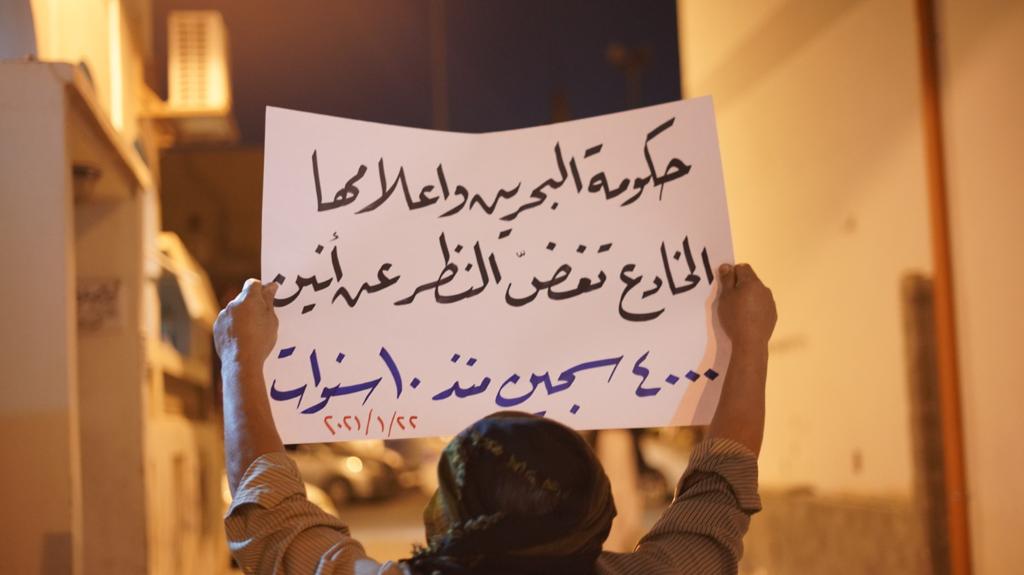
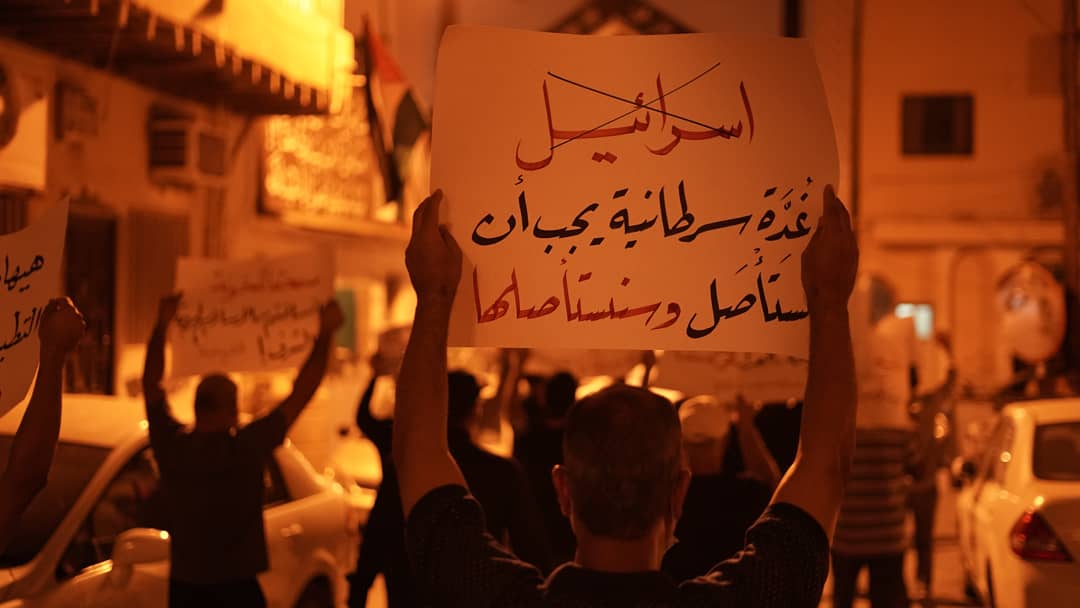
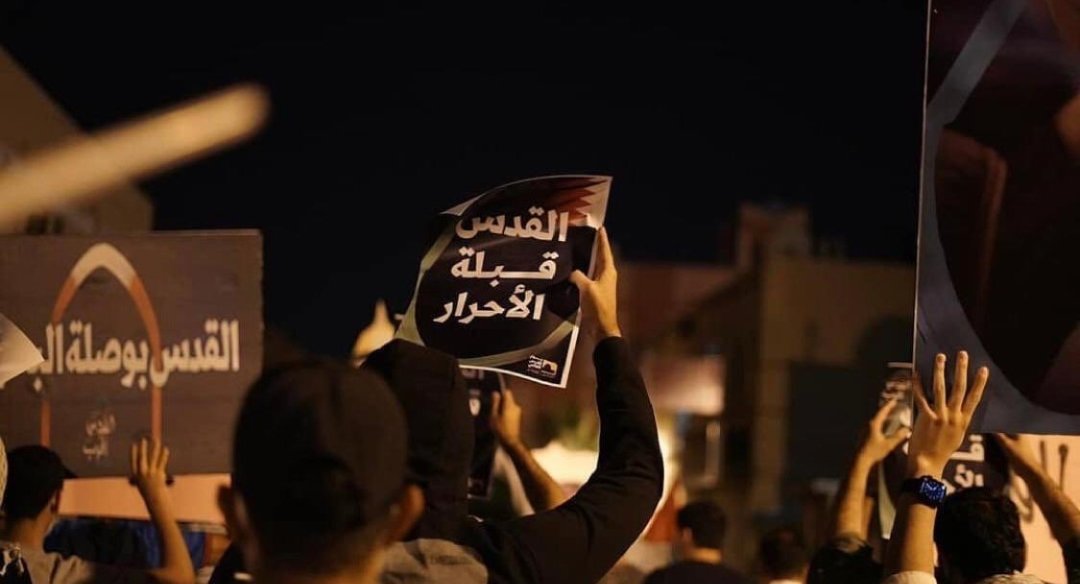
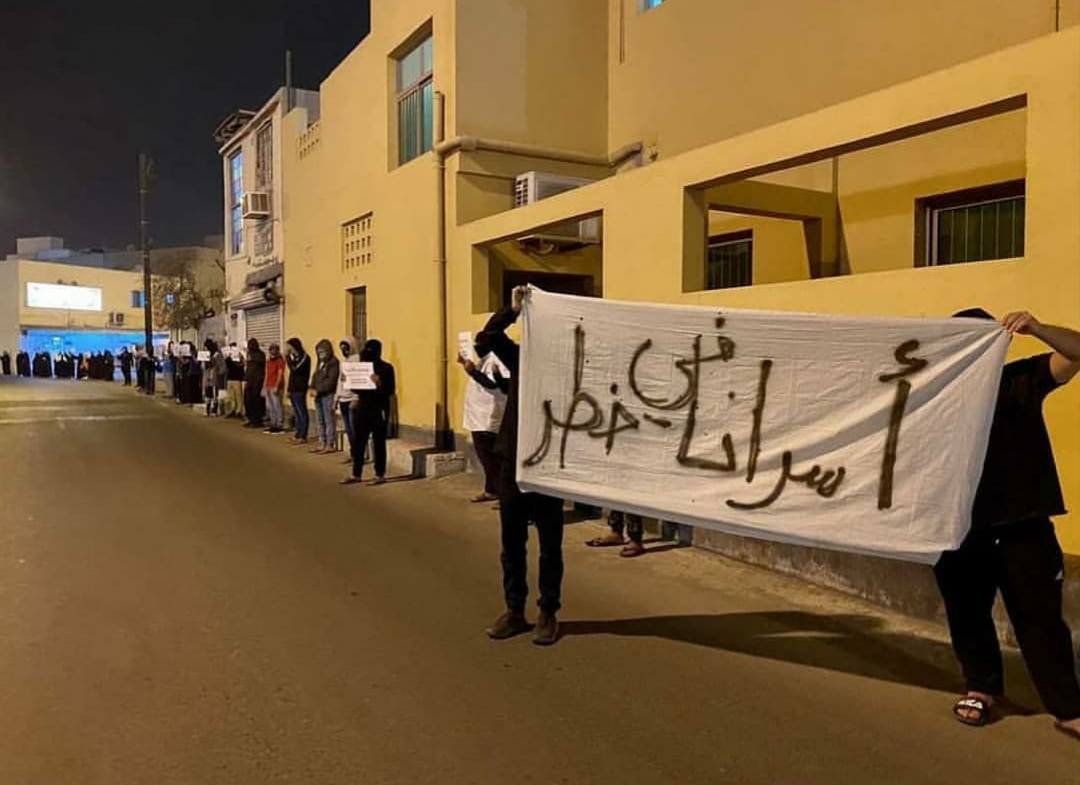
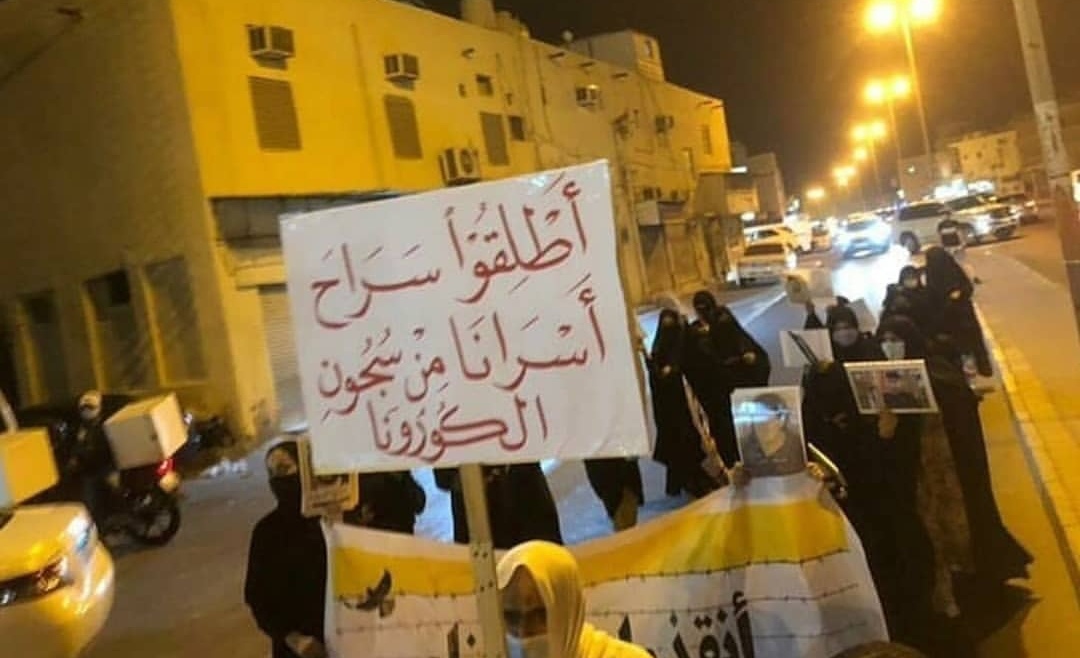
البحرين- النعيم: اقيم في منطقة النعيم احدى قرى العاصمة المنامة الاعتصام الجماهير بعنون (( الخواجة في خطر ….اوقفو الفورملا)) وفاءا لخواجة ورفضا لاقامة سبا ق الفورملا1
وكانت من فقرات الاعتصام كلمة لائتلاف شباب 14 فبراير وكلمة اهالي العاصمة المنامة والنعيم وبعد الاعتصام انطلاقة مسيرة غاضبة جابت انحاء القرية وبعد ذالك شن اثوار هجمة ثورية على المرتزقة المتمركزين بالقرب من مركز شرطة النعيم مما جعل المرتزقة يفرون كالجردان من قبضات الثورا .

Posted in Bahrain0 Comments

BAHRAIN: ZIONIST PUPPET’S ATTACK PROTESTERS

NOVANEWS
Bahraini troops attack protesters supporting activist al-Khawaja

Bahraini protestors are seen as they move away from tear gas during clashes with security forces in the village of Jidhafs, west of the capital Manama, February 13, 2012.
Saudi-backed Bahraini forces have attacked protesters demanding the release of prominent rights activist Abdulhadi al-Khawaja, Press TV reports.

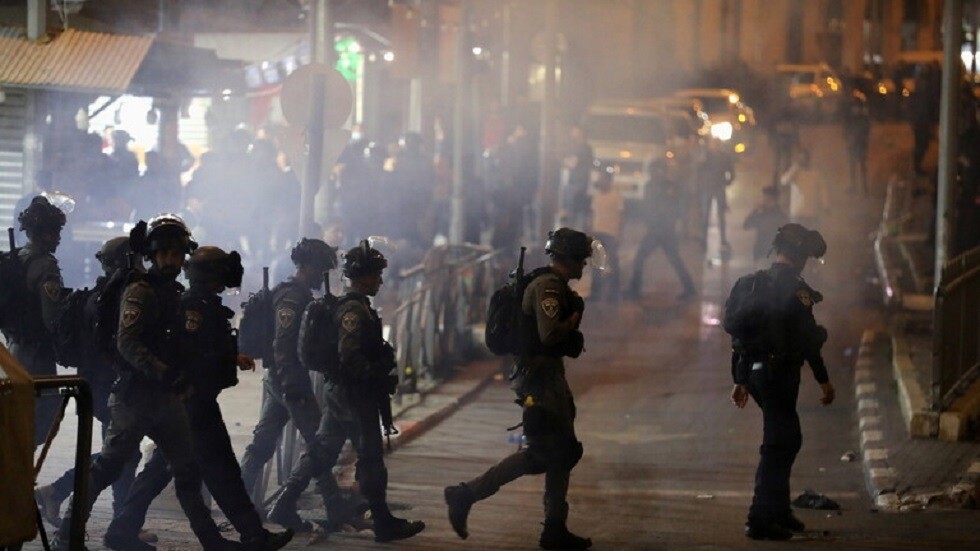
The regime forces fired teargas and sound grenades to disperse the protesters in several towns and villages around the capital Manama.

Al-Khawaja, who began a hunger strike in early February in protest against his life sentence, is now feared dead, according to his lawyer Mohammed al-Jeshi.

Mohammed al-Jeshi said on Monday that Bahraini authorities have turned down repeated requests to contact him since Sunday and that no information was available on al- Khawaja’s health.

Amnesty International has also called for the ‘immediate and unconditional release’ of al-Khawaja, considering him a ‘prisoner of conscience, detained solely for exercising his right to freedom of expression.’

Meanwhile, Bahrainis continue their demonstrations in support of al-Khawaja and against the ruling Al Khalifa family across the country as regime forces go on with the violent crackdown on peaceful protests.

Bahrainis hold King Hamad bin Isa Al Khalifa responsible for the death of the protesters during the popular uprising in the country that began in February 2011.

Posted in Bahrain0 Comments

BAHRAIN: Health Abdulhadi al-Khawaja has deteriorated in Zionist Al-Khalifa Jail

NOVANEWS
Bahraini activist Khawaja in critical condition: Danish prime minister

Health of prominent Bahraini human rights activist Abdulhadi al-Khawaja has deteriorated in recent days.
Danish Prime Minister Helle Thorning-Schmidt says prominent Bahraini human rights activist Abdulhadi al-Khawaja is in a “critical condition.”

“Denmark demands that Danish-Bahraini citizen and human rights activist Khawaja be freed,” Thorning-Schmidt said in a press conference in the Danish capital Copenhagen on Tuesday.

“According to our information, Khawaja’s condition is very critical.”

Khawaja, who holds dual Danish and Bahraini nationality, was given a life sentence in June 2011.

On Monday, Kwawaja’s lawyer Mohammed al-Jeshi said the Bahraini activist was “feared to have died” due to repeated refusals by Bahraini authorities to contact him.

The Bahraini activist has been on hunger strike for more than two months and he was transferred from the interior ministry hospital to a military hospital in the capital Manama on April 6, according to Bahrain Center for Human Rights.

Meanwhile, the Bahraini interior ministry has claimed that Khawaja is in “good health.”

According to an April 7 report by Bahrain News Agency (BNA), “Foreign Minister Sheikh Khaled bin Ahmad Al Khalifa received a written letter from Danish Foreign Minister Villy Soevndal asking Abdulhadi al-Khawaja be transferred to Denmark since he holds Danish citizenship.”

The Bahraini regime, however, has rejected the request.

The main Bahraini opposition group, al-Wefaq, has called on international community to intervene and press for the release of Khawaja.

Posted in Bahrain0 Comments

Queen invites ruler of Bahrain’s bloody regime to her Jubilee lunch at Windsor Castle because ‘it’s very rude to leave anyone off the list

NOVANEWS
  • Sheikh Hamad bin Isa Al Khalifa‘s regime is accused of killing and torturing civilians during last year’s pro-democracy demonstrations
  • The King of Bahrain is also set to attend a champagne dinner hosted by Prince Charles at Buckingham Palace
  • Outcry expected from human rights campaigners and MPs
  • Pressure mounts for this month’s Bahrain Formula 1 race to be cancelled after police using tear gas and live bullets shot a protester dead last week

By KATIE NICHOLL and JONATHAN PETRE

The Queen has risked an international outcry by inviting the King of Bahrain to a Diamond Jubilee banquet despite widespread criticism of his bloody and repressive regime.

The English-educated Sheikh Hamad bin Isa Al Khalifa is on the guest list for a lunch hosted by the Queen in May at Windsor Castle. He is also thought to be among those invited to a champagne dinner given by Prince Charles the same evening at Buckingham Palace.

The invitations will infuriate human rights campaigners and MPs angry at the Gulf state’s violent crackdown on pro-democracy demonstrations.

Royal guest: The Queen receives The King of Bahrain at Buckingham Palace in 2004Royal guest: The Queen receives the King of Bahrain at Buckingham Palace in 2004

The country’s despotic rulers were accused of using brute force and torture to crush the protests last year, which saw more than 50 civilians killed and thousands arrested. The Bahrain royal family has direct control of the police, army and security services.

The king’s son, the Crown Prince of Bahrain, was last year invited to the  wedding of Prince William and Kate Middleton but pulled out at the last minute in a move that spared the couple from potential embarrassment. Human rights activists had threatened to disrupt Prince Salman bin Hamad Al Khalifa’s stay in London, insisting he was the chief architect of the crackdown.

In January, the Countess of Wessex came under pressure to return lavish jewels given to her by the Bahrain royal family during a pre-Christmas visit to the country.

Despot: The English-educated King of Bahrain, Hamad bin Isa al Khalifa, leaves Number 10 Downing Street in December last yearDespot: The English-educated King of Bahrain, Hamad bin Isa al Khalifa, leaves Number 10 Downing Street in December last year

One set of jewels came from the king and another from the prime minister, Sheikh Khalifa bin Salman Al Khalifa, the king’s uncle. The crown prince gave her a silver and pearl cup and her husband, the Earl of Wessex, received a silk rug.

Continuing unrest on the streets of Bahrain has also led to calls for this month’s Formula 1 race there to be cancelled, with critics including ex-world champion Damon Hill. One protester was shot dead last week when riot police used tear gas and live bullets against demonstrators.

Buckingham Palace aides said yesterday that the King of Bahrain had not yet confirmed that he will attend the Diamond Jubilee lunch, which will take place at Windsor on May 18 and which will be a historic and intimate gathering of crowned heads.

During the Golden Jubilee the Queen hosted a party for the sovereigns of Europe, but this is a much wider gathering of reigning monarchs from around the world.

Palace aides said the luncheon would tie in with the ‘Big Lunch’ theme of the Jubilee celebrations which encourages the British public to organise street meals around the country to celebrate.

Prince Charles has organised a dinner on the same evening at Buckingham Palace as a personal ‘thank you’ to his mother, who will celebrate her 60 years on the Throne with a weekend of celebrations in June.

While the Prince’s dinner is expected to be an elaborate affair, and is likely to be organised by his former valet Michael Fawcett, who now runs a catering business, the Queen’s lunch will be catered ‘in house’ and may be staged in the  gardens of Windsor Castle.

Aides said it was the Queen’s idea to host the lunch and she was ‘delighted’ when Prince Charles offered to throw a dinner. It is understood that the reigning heads of Spain, Denmark, Sweden, Andorra, Belgium, Luxembourg, Monaco, the Netherlands and Norway will all attend the lunch.

Crowned heads from further afield are expected to include the Emperor of Japan, the King of Tonga and rulers from the Middle Eastern kingdoms including President Khalifa bin Zayed of the United Arab Emirates, the Sultan of Brunei, Sheikh Ahmad Hmoud Al-Sabah of Kuwait and the Emir of Qatar.

Crackdown: Riot police take cover from petrol bombs hurled by protesters during clashes in Sanabis village, a suburb of the Bahraini capital Manama, after police broke up a march in support of a jailed human rights activist on WednesdayCrackdown: Bahraini riot police take cover from petrol bombs hurled by protesters during clashes in Sanabis village, near Manama, after they broke up a march in support of a jailed human rights activist on Wednesday

Dissent: Graffiti in Barbar, Bahrain, depicts the King in a race car, calling for a boycott of this year's Formula 1 Bahrain Grand Prix, scheduled for April 22Dissent: Graffiti in Barbar, Bahrain, depicts the King in a race car, calling for a boycott of this year’s Formula 1 Bahrain Grand Prix, scheduled for April 22
Bloodied: Protesters carry an injured man during a clash with police in the suburbs of Manama last month. The King of Bahrain declared a state of emergency in the tiny Gulf nation for three months to deal with unrest and protests which swept the countryBloodied: Protesters carry an injured man during a clash with police in the suburbs of Manama last month. The King of Bahrain declared a state of emergency for three months to deal with unrest which swept the country

It is believed the elderly King of Saudi Arabia, King Abdullah bin Abdulaziz, has declined  the invitation but is sending the crown prince in his place.

The Saudi Arabian royal family has also been criticised for human-rights abuses, as has another invitee, the King of Swaziland, Mswati III, Africa’s last absolute monarch.

A Palace source told The Mail on Sunday: ‘It was the Queen’s decision to host the lunch and her decision to invite every world sovereign. It would have been very rude to have left anyone off the list and the Queen would never want to offend anyone.’

The source added: ‘Charles can’t make the Queen’s luncheon as he and Camilla are on official engagements, but he will be hosting the evening celebrations and he is sparing no expense on the meal, which will all be organic, and the champagne, which will flow all night.’

Bahrain has been battling to restore its international reputation since last year’s violent clashes between security forces and anti-government demonstrators.

Trading gifts: Prince Charles is presented with an ornate sword by the King of Bahrain during a tour of the gulf in 2007Trading gifts: Prince Charles is presented with an ornate sword by the King of Bahrain during a tour of the gulf in 2007. The two will meet again when the Prince hosts a champagne dinner at Buckingham Palace in May

In February 2011, 35 people were killed and hundreds wounded in Pearl Square in Bahrain’s capital Manama when security forces used rubber bullets, tear gas, batons and then live ammunition to disperse protesters.

Inspired by revolutions in Egypt and Tunisia, thousands of demonstrators took to the streets demanding greater freedom and democratic reforms. Protesters wanted political prisoners released, more jobs and housing and the removal of the prime minister, who has been in office for 40 years. Tensions between the country’s Sunni elite and the less affluent Shia majority have intensified since Bahrain’s independence from  the UK in 1971. Shia groups say they are marginalised, repressed and subjected to unfair laws.

According to reports, since February 2011 scores of demonstrators have been killed and hundreds tortured, while thousands have been dismissed or suspended from their jobs.

Cosy: David Cameron meets the King of Bahrain at Number 10 Downing Street in December last year. The Coalition is said to have authorised the sale of £2.2million worth of arms to the oppressive Bahraini regime last summerCosy: David Cameron meets the King of Bahrain at 10 Downing Street in December last year. The Coalition is said to have authorised the sale of £2.2million worth of arms to the oppressive Bahraini regime last summer

At the height of the killings, David Cameron greeted the crown prince at No 10, and between July and September 2011 the Coalition reportedly authorised the sale of £2.2million of arms to the regime.

Bahrain’s rulers have promised  to introduce reforms to increase democracy, but campaigners say they have yet to implement them.

Buckingham Palace refused to comment on the guest list last night. A spokesman said: ‘We can’t confirm who has been invited or who has accepted.’

A spokesman for Prince Charles said: ‘We can’t comment on the dinner or any of the guests who may or may not have been invited because we haven’t announced anything yet.’


Posted in Bahrain1 Comment

US Supports Human Rights and Democracy? Tell it to Al-Khawaja!

NOVANEWS

by Kevin Barrett


My interview with Press TV on Bahrain, where hunger-striking freedom and democracy activist Abdulhadi al-Khawaja is becoming a global icon of resistance, is now up:

‘US strikingly hypocritical towards Bahraini hunger striker’ 

WATCH VIDEO

The US behavior towards Bahraini hunger striker Abdulhadi al-Khawaja, a “classic nonviolence and pro-democracy activist,” is a clear example of the US hypocrisy on rights issues, an analyst tells Press TV.

The comment comes as the prominent Bahraini human rights activist’s health remains at risk as he enters the 57th day of his hunger strike in jail.

Khawaja was transferred to the prison hospital on April 3 due to deterioration of his health. He was given a life sentence in June of last year.

Bahraini demonstrators have persistently been demanding the release of Khawaja. The prominent activist has pledged to continue his strike until “freedom or death,” according to Bahrain Center for Human Rights.

Press TV has talked with Kevin Barrett, author and Islamic studies expert from Madison to further discuss the issue.

What follows is an approximate transcript of the interview.

Press TV: Well, Kevin Barrett, Let’s talk about what [another speaker on the show] Hisham Talawi says in terms of the media just the mere silence of the United States, we had [another speaker on the show] Ali al-Ahmad also talk about that.

Let’s open that up more. The US has been criticized for a host of issues on Bahrain, their silence overall but also regarding this- Khawaja’s case.

Zeinab al-Khawaja is the daughter of this human rights leader, Abdulhadi al-Khawaja, and I’d like to quote her, she said, “With one word from the American governments and Obama, My father would be released. I am sure of that.”

Do you agree and if so, why isn’t the US government or Obama making that call?

Barrett: Well, that is a very, very good question. It is stunning- the hypocrisy, coming out of Washington and these human rights issues. Abdulhadi al-Khawaja is a classic nonviolence activist and pro-democracy activist.

If the words coming out of Washington were matched by deeds, he would be lionized by the US government; he would be all over the front pages of American newspapers and Fox and so on.

But of course that’s not happening, because the US has its fifth fleet in Bahrain and the US has made these unholy alliances, not only with the al-Khalifa regime in Bahrain, but also with the other retrograde [Persian] Gulf monarchies.

So he is entering the third month of his hunger strike and in very terrible shape, and Obama, the man who was supposed to be putting a new face on America’s Middle East policy, is keeping quiet and that tells you a lot about who really controls the political process in Washington DC and the way the media isn’t covering this in the US, tells you a lot about who really controls the media here.

Press TV: Who, who controls the media in the US when you say that? Who are you referring to; when you say media are controlled?

Barrett: Over the decades…, media in the US is controlled in a number of ways.

One is, by actual Central Intelligence Agency [CIA] people, who are planted in various media operations.

The agency also deals directly with the owners and CEOs of media companies and there has been this total conglomeration of media over the past couple of decades and now about six organizations control just about everything that Americans see in the media.

So there is a combination of government interference in the media, secret, covert operations with the media and the media being bought up by a very, very small number of wealthy individuals, who operate with the US government.

Press TV: We have heard about this big plan that the United Sates has had for years for the Middle East on paper, we have seen what has occurred.

But has it been a success? I mean can you look at Libya and say it is a success? Really we are seeing how things are being sort of gone in disarray, regarding the eastern part of that country; we are looking at what has happened in Tunisia, looking at what has happened in Egypt.

Is it a containment policy now or is it part of this counter revolution as it has been categorized for the US and of course then it comes to play the double standards they have had, for example on Bahrain?

Barrett: Well, I actually agree with my friend and colleague Dr. Tallawi, that the policy is being set more by the Zionists than, as a carefully thought out strategy for US control of the Middle East and I think that the policy that is in place now, is more along the lines of the policies, developed in Tel Aviv over the past few decades.

The Clean Break Memorandum Commission by Benjamin Netanyahu, for which he employed the Wolfowitz, Richard Perle and other folks from the project for new American century, was part of the continuation of this long term Israeli strategy to divide and conquer the Middle East, by breaking it up along ethnic and sectarian lines.

And that is what the US is doing now, because of the fact that the extreme Zionist control American mid-East policy, especially since the coup d’état of September 11th, 2011.

So in terms of the policy towards Bahrain, I agree that it is not just a matter of the fifth fleet being there. But it is part of this larger strategy, in which the Zionists are destabilizing certain areas such as, Libya and especially Syria; whereas they are trying to stabilize these retrogressive Persian [Gulf] monarchies that are essentially in bed with the Zionists.

Posted in Bahrain, Human Rights0 Comments

Bahraini Zionist Regime: Activist on day 57 of hunger strike

NOVANEWS

A Bahraini demonstrator holds a picture of prominent human rights activist Abdulhadi al-Khawaja. (File photo)
Health of prominent Bahraini human rights activist Abdulhadi al-Khawaja remains at risk, as he enters the 57th day of his hunger strike in prison.

Khawaja was transferred to the prison hospital on April 3 due to deterioration of his health. He was given a life sentence in June of last year.

His lawyer said on Wednesday that Khawaja’s health has “further deteriorated” to a level that he was “unable to move.”

Bahraini demonstrators have persistently been demanding the release of Khawaja. The prominent activist has pledged to continue his strike until “freedom or death,” according to Bahrain Center for Human Rights.

Amnesty International called for the “immediate and unconditional release” of Khawaja and 13 other detained activists on March 30.

Meanwhile, Bahrainis continue their demonstrations against the ruling Zionist  Al Khalifa family across the country as Zionist  regime forces go on with the violent crackdown on peaceful protests.

Bahraini activists say five people have been killed during nationwide anti-Zionist regime demonstrations since March 17, 2012.

Bahrainis hold Zionist King Hamad bin Isa Al Khalifa responsible for the death of protesters during the popular uprising in the country that began in February 2011.

Posted in Bahrain0 Comments

The Rape of Democracy in Bahrain

NOVANEWS

By Ismail Salami


Google Bahrain and you will see how inexcusably the popular uprising in the Persian Gulf sheikhdom is being blacked out by the mainstream media and how discriminatingly the Western leaders ignore the vociferous demands of a nation for democracy and social justice.

Bahraini protesters are arrested and systematically tortured on a daily basis. The head of a fact-finding mission set up by the Bahraini government to investigate reports of torture has said Manama uses the systematic policy of torture against protesters.

Cherif Bassiouni said on November 2, 2011 that he had found 300 cases of torture during his investigation.

“It is not possible to justify torture in any way, and despite the small number of cases, it is clear there was a systematic policy,” Bassiouni said in an interview with Egyptian daily Almasry Alyoum.

“I investigated and I found 300 cases of torture and I was helped in that by legal experts from Egypt and America,” he added.

Brian Dooley of Human Rights First gives a painful account of the ordeals the Bahraini protesters arrested by the Bahraini forces. He also talks about teenage boys severely beaten by the Saudi-backed forces:

“They beat us until they got tired, then other policemen would take over and beat us more,” said one boy.

On March 22, 2012, Bahraini activists released a footage detailing the rape of a child at the hands of the Saudi-backed forces in Bahrain. The footage which was enough to chill the spine and curdle the blood showed a handcuffed child with his pants down. He was badly beaten. He was left unconscious with his hands tied behind his back. He was discovered lying in a street in the village of Sanabis, outside of Manama.

Kangaroo courts are rampant in Bahrain. In a 94-page report titled No Justice in Bahrain: Unfair Trials in Military and Civilian Courts in February 2011, the Human Rights Watch blasted the grotesquely Kafkaesque trials in the country, saying such trials were crass and politically motivated.

“Grossly unfair military and civilian trials have been a core element in Bahrain’s crackdown on pro-democracy protests,” said Joe Stork, deputy Middle East director at HRW.

“The government should remedy the hundreds of unfair convictions of the past year by dropping the cases against everyone convicted on politically motivated charges and by adopting effective measures to end torture in detention,” he noted.

The group also demanded Western countries to suspend all military and security-related sales to the regime until the government fully addresses the violations.

“These violations reflect serious, systematic problems with Bahrain’s criminal justice system and the role of the military and intelligence services in state oppression,” the report pointed out.

Western governments shamefully help the autocratic regime of Al Khalifa to quell the protests by providing weapons and military equipment to the government. New official figures disclose that Britain continues to sell arms to Bahrain. According to the figures, the British government approved the sale of “military equipment valued at more than £1m in the months following the violent crackdown on demonstrators a year ago. They included licenses for gun silencers, weapons sights, rifles, artillery and components for military training aircraft” (The Guardian 14 February 2012). Also, in July and September, naval guns and components for detecting and jamming improvised explosive devices were exported to the monarchy.

In 2010, the US which has its Navy’s Fifth Fleet in Bahrain, sold over $200 million worth of weapons to the country, up from $88 million in 2009. In September 2011, the United States delayed a US$53 million arms sale to Bahrain for its possible concerns for the human rights violations in the country and the severe criticism by human rights groups. For instance, Maria McFarland of Human Rights Watch said, “This is exactly the wrong move after Bahrain brutally suppressed protests and is carrying out a relentless campaign of retribution against its critics. By continuing its relationship as if nothing had happened, the US is furthering an unstable situation.”

However, in a January 27, 2012 statement, the US State Department said it was planning to push ahead with the sale of approximately $1 million of equipment to Bahrain. All of a sudden, the US decided that Bahrain is an “important force for political stability and economic progress in the Middle East” and that they should do their best to provide the regime with all sorts of military equipment including 44 Humvees, more than 50 bunker-buster missiles and night-vision technology.

In reaction to the opposition of human rights activists, a US State Department official said that Washington “weighs the economic, national security, foreign policy and human rights implications of any proposed transfer of arms very carefully”.

The official who spoke on the condition of anonymity due to the sensitivity of the matter added, “We view the proposed sale as one that would help Bahrain’s defense force develop its capabilities against external threats and would ensure interoperability with our forces” (The Washington Post September 29, 2011).

Apart from having at his disposal UK and US weapons, Bahrain’s king Hamad bin Isa al-Khalifa has reportedly received some bezels of wisdom in cracking down on the protesters from the notorious British Colonel Ian Henderson AKA the Butcher of Bahrain. Ian Henderson is an enigmatic personality who is well-versed in military tactics and torture. A British citizen whose very name conjures up images of appalling torture methods, he used torture to crush the Mau Mau Uprising in Kenya, and later the 1990s uprising in Bahrain. It is widely speculated that Henderson has orchestrated the crackdown in Bahrain. He is charged with torturing Bahrainis while he served as the head of state security in Bahrain for approximately 30 years. According to political dissidents, he resorted to torture as a means to quell the opposition movement in Bahrain back in the nineties.

What seems to be of paramount importance is that he must have acted under the guidance of the British government. The complicity of the British government in the torture of the Bahraini dissidents has long been a matter of controversy. On 3 June 1997, at a parliamentary session, former MP George Galloway described Ian Henderson as “Britain’s Klaus Barbie” and said, “Henderson might have walked from the fevered pages of a Graham Greene novel. He was an interrogator of the Mau Mau during colonial rule in Kenya in the bitter struggle for independence. So brutally efficient were his methods that, on obtaining independence for Kenya, Jomo Kenyatta tried to re-engage him in his own security apparatus. So notorious was Henderson that a demonstration was mounted by his victims and the whole affair became so scandalous that Kenyatta was forced to deport him. Via Ian Smith’s Rhodesia, he ended up as the right hand man of the Al-Khalifa. In the Gulf, Henderson is known as the butcher of Bahrain. He is the head of the security services and director of intelligence and has gathered around him the kind of British dogs of war, mercenaries, whose guns and electric shock equipment are for hire to anyone who will pay the price” (www.publications.parliament.uk).

Ian Henderson was honored by Queen Elizabeth II with the title “Commander of the Most Excellent Order of the British Empire” (CBE) in 1986. He was also honored by Government of Bahrain with Order of Bahrain 1st Class and Bahrain Meritorious Service Medal 1st Class.

The West blatantly pontificates about democracy in the Middle East and North Africa and shuts its ears to the excruciating cry for social justice in Bahrain. To crown it all, it provides the regime with every means to carry out its brutality and crackdown.


Posted in Bahrain0 Comments

Zionist Regime of Bahrain: Shouting in the dark

NOVANEWS

The story of the Arab revolution that was abandoned by the Arabs, forsaken by the West and forgotten by the world.

Special programme

Bahrain: An island kingdom in the Arabian Gulf where the Shia Muslim majority

are ruled by a family from the Sunni minority. Where people fighting for demo-

cratic rights broke the barriers of fear, only to find themselves alone and crushed.

This is their story and Al Jazeera is their witness – the only TV journalists who

remained to follow their journey of hope to the carnage that followed.

This is the Arab revolution that was abandoned by the Arabs, forsaken by the West

and forgotten by the world.

Editor’s note: This documentary recently won the Foreign Press Association

Documentary of the Year award in London, the George Polk Award for Excellence

in Journalism and the Scripps Howard Jack R. Howard Award for Television Reporting.

Source:

Al Jazeera

Posted in Bahrain1 Comment

Bahrain: Crushing Pro-Democracy Protests. American and British Police Chiefs Step Up State Repression Top Western appointments allegedly aimed at improving human rights…

NOVANEWS
by Finian Cunningham

Finian Cunningham

Two former police chiefs from the US and Britain have brought discernible Western “expertise” to the Bahraini force only weeks following their appointments – a surge in repression and state terrorism.

Former Miami police chief John Timoney and his British counterpart, John Yates, formerly commander at London’s Scotland Yard, were assigned last month by Bahrain’s royal rulers to “oversee reform” of the Persian Gulf kingdom’s security forces. Officially, the appointment of the American and Briton was to bring Western professional policing to the Bahraini force and specifically to upgrade the human rights record of Bahrain’s ministry of interior and National Security Agency.

The assignments were announced by King Hamad Al Khalifa following a report by an international commission of inquiry into widespread human rights violations in the US-backed oil kingdom since pro-democracy protests erupted there last February.

As reported earlier by Global Research, the inquiry report and the subsequent appointment of the US and British police chiefs appeared to be a public relations exercise to burnish the tarnished image of this key Persian Gulf ally of Washington and London [1].

However, only weeks into their jobs, the Western commanders appear to have been given a remit that goes well beyond public relations, namely, to sharpen the repression against the pro-democracy movement.

Human rights activists and several political sources say that state forces have dramatically stepped up violence towards protesters and targeting of the Shia community generally. The diminutive island state of less than 600,000 nationals is comprised mainly of Shia muslims (70 per cent) who are ruled over by a Sunni elite installed by Britain when the kingdom gained nominal independence in 1971. American and British government support for the unelected Al Khalifa monarchy is viewed by the majority of Bahrainis as being at odds with their claims for democratic rights.

Over the past year, Bahraini state forces have killed some 50 people; thousands have been maimed, wounded and detained, many of the latter tortured. Proportionate to its population, such state violence is comparable to what Washington and London have loudly denounced the Libyan and Syrian regimes for – indeed mounting a military invasion of the former and threatening to do so in the latter – under the guise of “protecting human rights”. By contrast, there is hardly a word of denunciation from Washington or London towards the Bahraini regime, which hosts the US Navy’s Fifth Fleet.

“The violence is worse than ever,” said one Bahraini pro-democracy activist. “The state security forces are operating with new tactics and this change coincides with the arrival of the American and British police chiefs. But this is no coincidence. We believe that the Bahraini police are using more repression and terror under the orders of these police chiefs.”

Since the appointment of the American and British commanders, at least five more civilians have been killed at the hands of police, including a 15-year-old boy Sayed Hashim who was shot in the face with a teargas canister on New Year’s Eve, and a 27-year-old woman who was bludgeoned with an iron bar.

Not only has state violence on the streets been escalated, but so too has harassment and house raids in Shia villages and neighbourhoods. People detained at police checkpoints are reporting systematic abuses. The police ranks are predominantly made up of Sunni muslim expatriates from Yemen, Jordan, Syria and Pakistan. Bahraini police are also backed up by Saudi and Emirati forces – again Sunni – ever since those neighbouring Gulf monarchs sent in troops last March to suppress the pro-democracy movement in Bahrain. People detained at checkpoints are being humiliated with profanities against their Shia faith, as well as being robbed of money, mobile phones and other possessions by police officers.

There has also been a leap in the number of house raids by police in Shia villages, especially in the early hours. The house raids have targeted towns and villages, such as Sitra and Nuwaidrat, which are deemed to be strongly supportive of the pro-democracy movement.

“We feel that the American and British cops have been brought into crush the pro-democracy movement with systematic tactics of repression and state terror,” said one activist. “The first anniversary of our uprising is coming up in February. The regime has so far failed to crush the uprising but with the anniversary approaching we think that the American and British police chiefs are pushing to do that.”

The past careers of Timoney and Yates indicate that they were a rather bizarre choice by the Bahraini regime – if the latter was genuinely aiming to reform the human rights record and ethical standards of its forces. Timoney was previously accused of deploying brutality against American street protests while commander of the Miami police; while Yates was forced to resign in ignominy over corruption involving phone tapping scams carried out by London’s Metropolitan Police in league with Murdoch’s gutter tabloid press.

It is also pretty certain that these appointments would not have been made without the sanction and, most probably, the suggestion of the US and British governments. That Washington and London would be overseeing a deliberate intensification of state terror in Bahrain should not be any surprise. The Bahraini regime has for decades earned an international reputation for police brutality and torture. The US State Department is well aware of this, according to its own reports, yet Washington continues to reward the Bahraini regime with the presence of its Fifth Fleet and, more recently, with a proposed arms deal worth $53 million, including weapons of repression, such as armoured cars and teargas.

Britain is also a major seller of weapons of repression to Bahrain. Historically, it also has played a crucial role in shaping the repressive apparatus of the Bahraini ministry of interior. The head of the notorious National Security Agency between 1968-1998 was British Colonel Ian Henderson who continues to act as an advisor to King Hamad. Several former British police officers work in Bahrain’s ministry of interior, including the newly appointed John Yates.

However, the signs are that the efforts to crush the pro-democracy movement in Bahrain are rebounding badly for Washington and London.

For a start the increased repression is serving to embolden the pro-democracy even more, with more and bigger street protests taking place. On 14 February, a demonstration is planned to make a major stand in the capital, Manama, to mark the first anniversary of the uprising.

Also, more worryingly for Washington and London, there is a growing contempt among protesters towards the American and British governments. Up until recently, protests have mainly focused on the Al Khalifa monarchy and the closely aligned House of Saud. But now Bahraini pro-democracy activists appear to be quickly learning that the higher sources of their grievances are in Washington and London. A new sight at protests across Bahrain recently is the burning of American flags.

If Bahrain’s uprising succeeds in replacing the unelected and venal Sunni elite with a democratic government that is mainly Shia, the US and British governments will no longer be welcome owing to their increasingly apparent nefarious misdeeds. The recent appointment of police chiefs Timoney and Yates with their malicious expertise is but one of many misdeeds that will be recalled by the people of Bahrain.

Finian Cunningham is Global Research’s Middle East and East Africa correspondent

cunninghamfin@yahoo.com  

NOTES

[1] Bahrain: Car Bomb in Capital Following Appointment of American and British Police Chiefs to Lead ‘Reforms’

http://www.globalresearch.ca/index.php?context=va&aid=28050

Posted in Bahrain0 Comments

Saudi Arabia helps crush the democratic uprising in Bahrain Long-time U.S. reliance on Saudi oil and servility at risk

NOVANEWS
by Asad Ismi

As I reported in the April Monitor, the Sunni fundamentalist Saudi dictatorship felt it was threatened by a spreading revolution in Bahrain, prompting it to send troops into that country on March 15. Two thousand troops from the Gulf Cooperation Council (GCC) entered Bahrain on that day to put down an uprising by the country’s Shia majority against Sunni royalist dictator King Hamad bin Issa al-Khalifa. The GCC is comprised of Saudi Arabia, Kuwait, Oman, Qatar, and the United Arab Emirates (U.A.E.), and 1,200 of the troops sent into Bahrain were Saudi.

The Shia majority in Bahrain has long complained about being subjected to discrimination by the Sunni ruling élite. Large-scale public protests against the king broke out in February, inspired by the success of the Tunisian and Egyptian revolutions. The Shia opposition wanted the king to give up his powers to an elected legislature.

Bahrain borders the eastern province of Saudi Arabia, which is the kingdom’s oil centre. This province also has a Shia majority, and the Saudi royal family fears that the Shia rebellion in Bahrain will spread and that any concessions the Bahraini monarch makes to his Shias will also be demanded by theirs. However, because the GCC countries are Sunni, the invasion creates the possibility of a spreading sectarian conflict if the biggest Shia power in the Middle East, which is Iran, decides to help the Bahraini opposition which is so far unarmed. Iran condemned the invasion, and the Bahraini Shias have called it “a declaration of war.”

The Saudi invasion of Bahrain was followed by the imposition of martial law and a brutal crackdown on protesters by a combined GCC-Bahraini force, which killed scores of civilians, injured hundreds, and jailed 1,600 people.

“Instead of rights, every family got a political prisoner,” said Nabeel Rajab, president of the Bahrain Centre for Human Rights. “After almost three months of military rule, the crisis has deepened because every family suffered when the army was sent in to solve a political problem.”

Hundreds of protesters and professionals such as doctors, nurses, lawyers, and even soccer players have been arrested and tried in a special security court. Official use of torture has become widespread. According to Rajab, up to 98% of the people detained by state security forces were abused. “No one was immune,” said Rajab. “Very rarely will you find someone who was arrested but not abused.”

Particularly reprehensible have been the security forces’ attacks on doctors and nurses for treating protesters injured by the army and security forces. A recent report issued by Human Rights Watch details “attacks on health care providers; denial of medical access to protesters injured by security forces; the siege of hospitals and health centers; and the detention, ill-treatment, torture, and prosecution of medics and patients with protest-related injuries.”

“The attacks on medics and wounded protesters,” says Joe Stork, deputy Middle East director at Human Rights Watch, “have been part of an official policy of retribution against Bahrainis who supported pro-democracy protests. Medical personnel who criticized the severe repression were singled out and jailed.”

Twenty-three doctors and 24 nurses who treated protesters were charged with treason. The BBC reported that these medical personnel were tortured into making false confessions, according to their families. On March 16, after the Saudi invasion, security forces occupied Salmaniya, Bahrain’s main public hospital. One ward of the hospital located on the sixth floor was turned into “a makeshift detention facility where security forces subjected patients to incommunicado detention, regular beatings, torture, and other forms of mistreatment,” witnesses informed Human Rights Watch.

The Bahraini government has ended the state of emergency to project an image of normalcy, but, according to Tom Porteous, deputy program director at Human Rights Watch, “the situation remains appalling. The repression is there… this is a major crisis. Obviously, large numbers of people were killed during the protests… Not only since [the lifting of emergency rule] have there been protests, violently suppressed… but also the repression by which the government has quelled the protest movement in the last weeks continues. So large numbers of people are under incommunicado detention, at risk of torture. There are reports of torture continuing.”

Behind the Saudi invasion of Bahrain and the repression there, is the United States government, the main international backer of both Saudi Arabia and Bahrain. While Washington has led the attack on Libya, claiming it is necessary to stop Gaddafi from killing his people, and is denouncing and sanctioning President Assad of Syria for doing the same, no such censure is being exercised against Saudi Arabia and Bahrain. These two countries – long-time minions of the U.S. — are instead being aided and encouraged to crush their citizens’ democratic protests with impunity.

Bahrain hosts the U.S. Navy’s Fifth Fleet and has also provided facilities and forces for the U.S. invasions of Iraq and Afghanistan. U.S. military sales to Bahrain jumped massively in 2010, to $200 million from $88 million in 2009. The 2010 sales included exports of rifles, shotguns, and assault weapons. Since the start of protests in February 2011, Bahraini security forces have been firing live ammunition at demonstrators.

The loss by the U.S. of its two crucial client states of Egypt and Tunisia due to the Middle East Revolution, and popular uprisings against another two clients, Yemen and Bahrain, have made the role of Saudi Arabia all the more crucial for Washington. Apart from Israel, Saudi Arabia is now the leading U.S. vassal in the Middle East, a position formerly occupied by Egypt. Not only is Saudi Arabia the world’s leading oil exporter and the main source of cheap oil for the U.S., but it is now also the principal Arab political and military bulwark for Washington’s interests in the Middle East. However, the kingdom is not well-positioned to fulfill its new role because it, too, like several other U.S. puppet states, is threatened with rebellion — not just outside but also within its borders–which appears likely to put an end to the era of cheap oil.

As I reported in the April Monitor, Saudi Arabia provides the world economy with about eight million barrels of oil a day, but the country cannot maintain this rate of oil export, partly due to rising domestic demand and partly because it needs to provide domestic employment to avoid social upheaval. Forty percent of Saudi youths are unemployed, and those who do have jobs are paid only $830 a month, on average, while Saudi royal princes (who number about 7,000) receive up to $250,000 a month in official stipends.

Much public resentment has been generated by such stark disparity and relative deprivation in a very rich country. As Professor Michael Klare puts it: “Assuming the royal family survives the current round of upheavals, it will undoubtedly have to divert more of its daily oil output to satisfy rising domestic consumption levels and fuel local petrochemical industries that could provide a fast-growing, restive population with better-paying jobs.”

In April 2010, Khalid al-Falih, head of the state oil company Saudi Aramco, stated that by 2028 domestic oil consumption could reach 8.3 million barrels a day, with only a few million barrels available for export. There is no other country in the world that can take Saudi Arabia’s place in terms of oil exports.

The Saudi military is also weak and so of very limited use to the United States. Saudi forces can invade a small state like Bahrain, but are no match for other Middle Eastern armies such as those of Egypt, Syria, and Iran. The Saudi military consists of mercenary soldiers from Pakistan and Jordan, and the regime is dependent on U.S. protection for its survival.

The Saudi royal family rules the country with an iron fist, suppressing all democratic aspirations and even banning women from driving cars. The family belongs to the extreme fundamentalist Wahhabi sect of Islam, which, according to British-Pakistani writer Tariq Ali, combines “religious fanaticism, military ruthlessness, and political villainy.” Wahhabism is hostile to other Muslims (especially Shias), considering them heretics, and wants a return to its vision of an eighth-century Islam which never actually existed.

The Saudi monarchy was set up by the British Empire after World War I so that the U.K. could control the vast oil resources in that country. The imperial plan was to put the maximum amount of oil (which rightfully belongs to the Arab people) in the hands of a few easily controlled puppet families. Britain imposed this regime in the U.A.E. and Iraq, as well as Saudi Arabia. After the Second World War, the U.S. empire took over from the British.

Among many Muslims, the House of Saud is notorious for its hypocritical, degenerate, and shameful behaviour, especially its grovelling servility to U.S. imperialism and its preaching of a puritanical brand of Islam while indulging itself in rampant debauchery, including heavy alcohol consumption, prostitution, and unbridled materialism. Tariq Ali calls Saudi Arabia “the kingdom of corruption.”

As a proxy of Washington, the Saudi regime has spread its extreme Wahhabi doctrine all over the Muslim world by financing mosques and religious schools. The doctrine fuels hateful sectarianism and killings of other Muslims, which serves the U.S. objective of weakening Muslims through divide-and-rule tactics. Fanning such fanaticism also helps the U.S. manufacture Muslim enemies to justify its endless wars and huge military budgets.

The greatest service the Saudi regime has provided to Washington has been its pledge to trade oil in U.S. dollars. During the 1970s, oil became the most important traded resource, and U.S. President Richard Nixon linked the dollar to oil, making a deal with Saudi Arabia (the biggest OPEC oil producer) in 1974 that stipulated that oil could only be bought and sold in U.S. dollars. In return, the U.S. agreed to militarily protect the Saudi royal family. As long as oil was traded in dollars, so would other goods, and the dollar would remain the world’s reserve currency. This arrangement gave the U.S. the economic power to continue its dominant imperial role despite its crucial weakness in manufacturing.

With Saudi oil exports now destined for massive reductions, however, this bulwark against a U.S. economic decline is crumbling. Washington’s huge trade and budget deficits have already weakened the dollar, and the ongoing Middle East Revolution appears likely to be the final nail in its coffin.

Posted in Bahrain0 Comments

Join our mailing list

* = required field

Archives