Archive | Iran

Iran to lead UN Disarmament Conference in Geneva

NOVANEWS

ynet 

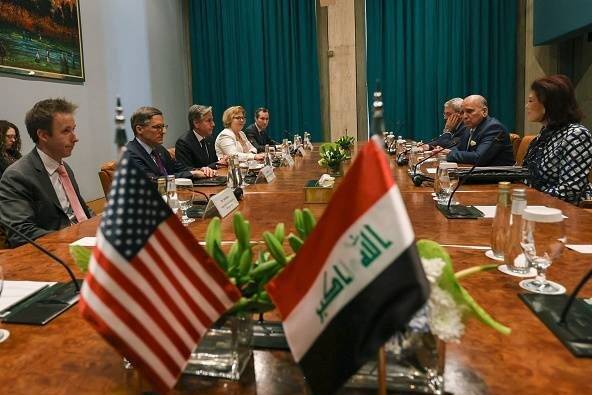
Iran on Tuesday defended its election as the rotating chair of the world’s sole multilateral disarmament forum after the United States announced that its ambassador to the UN Conference on Disarmament would boycott any meeting led by Tehran.

The UN Conference on Disarmament has been deadlocked for about 15 years. While the chairmanship of the Geneva-based body is largely ceremonial, it is a high-profile position.

“The Islamic Republic of Iran is a founding member of the United Nations,” said Alireza Miryousefi, spokesman for Iran’s UN mission.

“Its election to the presidency of the Conference on Disarmament, as the most important disarmament negotiating body of the UN, is its right in accordance with the established practice and rules of procedure of this organ,” he said.

Erin Pelton, spokeswoman for the US mission to the United Nations, said on Monday that the selection of Iran was “unfortunate and highly inappropriate.” She said countries under UN sanctions for arms
proliferation or human rights abuses should be barred from such formal or ceremonial UN posts.

Iran is under sanctions by the United Nations, the United States, the European Union and other international bodies for refusing to halt a nuclear enrichment program that Tehran says is peaceful but Western nations and their allies suspect is aimed at giving it the capability to produce atomic weapons.

The United States and Europe have also accused Iran of violating a UN embargo on Iranian arms exports in order to supply weapons to Syrian President Bashar Assad. They say Tehran is support Assad’s efforts to defeat rebels seeking to overthrow him in the country’s two-year civil war.

Pelton said the US ambassador to the Conference on Disarmament would boycott any meeting chaired by Iran.

Miryousefi denied that Iran was in violation of any of its treaty obligations, and vowed to uphold its duties as leader of the conference.

“During its presidency, the Islamic Republic of Iran would focus on promoting the goals and objectives of the Conference on Disarmament through according the highest priority to nuclear disarmament and the total elimination of nuclear arsenals of the nuclear-weapon States in an irreversible, transparent and internationally verifiable manner,” Miryousefi said.

Iran will chair the conference for four weeks beginning on May 27. The 65-nation Conference on Disarmament, created in 1978, negotiated biological and chemical weapons conventions but has been unable to carry out substantive work since 1998 because members could not agree on priorities.

A key task proposed for the panel has been to negotiate a halt to production of nuclear bomb-making fissile material. But that step has been blocked by Pakistan, which says it would put it at a permanent disadvantage to rival India.

UN Secretary-General Ban Ki-moon has repeatedly urged the disarmament conference to overcome its deadlock.

Hillel Neuer, the head of UN Watch, a Geneva-based advocacy group that monitors the work of the United Nations, said in a statement on Monday that the selection of Iran as the conference chair “is like putting Jack the Ripper in charge of a women’s shelter.”

Posted in Iran0 Comments

Good-bye Dubai? Bombing Iran’s Nuclear Facilities would leave the Entire Gulf States Region virtually Uninhabitable

NOVANEWS
Global Research

“In individuals, insanity is rare; but in groups, parties, nations and epochs, it is the rule.”― Friedrich Nietzsche

Every Spring and Summer, during a period of low pressure over the Persian Gulf, powerful winds known as the “shamals and sharqi,” sweep down from the north and north east into Saudi Arabia, whipping up ever more grains of sand as they head south and south west across the Arabian Desert. Frequently, these sandstorms become gargantuan in size – hundreds of meters high and kilometers wide and in length of dense roiling particulate, choking the lungs of those exposed, blocking out the sun completely and, by the time they are over, burying whole towns, sometimes even large cities like Riyadh, in a meter deep or more of sand.


Sandstorm hitting Riyadh, Saudi Arabia, 2012

The wind speeds range from 30 to 300 kilometers per hour, and they generally take a semi-circular route, heading back out to the southern gulf and the remaining Gulf States. Indeed, on an annual basis all of the Gulf States combined – UAE, Qatar, Bahrain, Oman, Kuwait and Saudi Arabia, suffer through literally hundreds of such sand and dust storms. And most often the winds driving those sandstorms originate from the north and north east (Iran, Iraq, Kuwait, and sometimes even Turkey).

NASA satellite image of typical shamal wind directions

Below is a map showing the location of Iran’s nuclear facilities and uranium mines. Now look again at the previous NASA satellite image and note the primary shamal wind direction.

Think “Fukushima x 10”: Bombing Iran’s nuclear facilities would leave the entire Gulf State region virtually uninhabitable.

Fukushima is, without question, the world’s worst nuclear disaster to date. In fact, many scientists believe, and with good reason, that the Fukushima incident, which is far from over, is the world’s worst environmentalcatastrophe.

“While the long-term repercussions of the Fukushima Daiichi nuclear disaster are yet to be fully assessed, they are far more serious than those pertaining to the 1986 Chernobyl disaster in the Ukraine, which resulted in almost one million deaths (New Book Concludes – Chernobyl death toll: 985,000, mostly from cancer” Global Research, September 10, 2010. For a full account of Fukushima, see “Global Research Online Interactive Reader Series, Fukushima: A Nuclear War without a War, The Unspoken Crisis of Worldwide Nuclear Radiation (Michel Chossudovsky, editor).

Now imagine several large nuclear reactors (Iran’s Bushehr reactor output, for example, is 1000 megawatts, compared to Fukushima Daiichi’s largest reactor which had an output of 784 megawatts), along with several uranium enrichment plants, and certainly military storage sites and quite likely even uranium mines, all bombed to dust within a matter of days. Moreover, unlike the Fukushima Daiichi reactors which suffered only partial meltdowns with much of the fuel rods and spent fuel storages remaining mostly intact, “all” of Iran’s nuclear fuel would be exploded into the atmosphere. And let us not forget that the US-Israeli military ordinances employed to destroy Iran’s nuclear facilities would certainly be tipped with depleted uranium, and very likely would include some mini-nukes.

Indeed, in regards nuclear disasters and environmental catastrophes, Fukushima would absolutely pale in comparison to that caused by the bombing of Iran’s nuclear sites. The nuclear fallout from such an event would be extreme, to put it mildly. Tens, if not hundreds of thousands of innocent Iranians would likely die within the first year of such a strike, while millions more would die within a decade or two of some form of radiation-induced cancer. And since a significant portion of that nuclear fallout would end up either immediately, or over the course of the next weeks and months in the Arabian Desert, where the winds, year after year, would gather it up along with the particles of sand and dust into gigantic roiling irradiated storms (remember, “hundreds” of such sand and dust storms annually), not a person living anywhere in the Gulf State region would be safe from exposure. The Persian Gulf, too, would soon be so irradiated and toxic and lifeless that it might as well be renamed the New Dead Sea.

Some statistics worth recalling: The half-life of cesium-137 is just over 31 years, while that of strontium-90 is approximately 29 years. Plutonium-239, the most dangerous of the above-mentioned radioactive substances, has a half-life of 24,110 years. And uranium, which is the primary target and which will make up the largest percentage of the fallout, has a half-life ranging between 700 million to nearly 4.5 billion years, depending on the type of uranium used—U-235 or U-238. It’s also worth noting that it takes an estimated 20 x the half-life years listed for the radiation from such contamination to dissipate entirely.

Of course, a lot of that radiation would also enter the jet stream, which would then carry it around the globe, depositing it as nuclear fallout everywhere. No nation, no body of water, would be spared. It takes but “one” inhaled or ingested “hot” particle to produce a life-threatening cancer.

Calling for, even so much as contemplating, such a genocidal event is madness; actually carrying it out would be insanity beyond description.

We must conclude, therefore, that the US-NATO-Israeli alliance is bluffing. Shortly before each and every scheduled P5+1 negotiations regarding Iran’s nuclear program, the corporate/government controlled mainstream media in the West ratchets up the threats, with Israel insisting that they will soon bomb Iran’s nuclear facilities if their nuclear program isn’t shut down. We’ve been hearing these same threats for more than a decade now. The very fact that the other Gulf States in the region are in support of the US-NATO-Israeli alliance also suggests that such threats are all smoke-and-mirrors, attempts to scare Iran into accepting whatever demands US-NATO and Israel want.

Surely, the Gulf State monarchs especially are aware enough to realize that, even if Iran is planning to develop a nuclear weapon (for which no evidence whatsoever exists), a nuclear-armed Iran would be far less of a danger to them than a bombing of Iran’s nuclear facilities, which would positively guarantee their demise. Even Israel, which is only 1100 kilometers away from Iran, and also experiences regular severe sand and dust storms, would likely suffer dire consequences as a result of the radiation fallout from such an attack.

Has such absolute insanity infected the minds of the Western powers to such a degree that they actually would attack Iran, and in so doing destroy the entire Gulf State region, further irradiate the entire planet and themselves, and quite possibly set off World War III? Or is it all just smoke-and-mirrors, scare tactics and rhetoric, and saner minds will in fact prevail?

Let us all hope and pray for the latter.

Posted in Iran, USA0 Comments

Ahmadinejad: ‘Palestine will one day be liberated’

NOVANEWS
By JPOST.COM STAFF
Iranian  president to US  university  students: US  should "stop supporting the Zionist regime," dialogue with IsraHell won't solve problems.

Iranian President Mahmoud Ahmadinejad.

Iranian President Mahmoud Ahmadinejad. Photo: REUTERS/Morteza Nikoubazl
Iranian President Mahmoud Ahmadinejad said he believes “Palestine will one day be liberated,” saying the Iranian government believes it is the Palestinians’ right to establish a state, speaking with university students in New York on Wednesday.

It would be better for the United States, he added, to “stop supporting the Zionist regime,” the official Iranian IRNA news agency reported.

Entering dialogue with Israel, Ahmadinejad added, would not solve the Palestinians’s problems. He was referring to US President Barack Obama’s speech at the United Nations Wednesday, in which he said that only negotiations could lead to the establishment of a Palestinian state.

Israel itself, he claimed, was established “in a bid to extend dominance over the Middle East.”

Addressing the Arab Spring and changes taking place throughout the Middle East, the Iranian president told students and teaching staff of several universities that recent events are a response to US hegemonic policies.

Middle Eastern nations, he said, are fed up with the “bullying” policies of the West.

Several days earlier, in an interview with American journalist Charlie Rose, Ahmadinejad also addressed the American hikers who were subsequently released from Iranian prison.

Asked about the case, Ahmadinejad said that he “would like to see all prisoners released,” especially political prisoners.

Questioned whether that statement applies to political prisoners in Iran, he denied that the Islamic Republic has any political prisoners, saying the state’s law doesn’t allow for it.

Posted in Iran, Palestine Affairs0 Comments

Iran to Hold June Presidential Election in 120 Countries

Iran’s next presidential election will be held in 120 foreign countries concurrent with Iran, a senior official announced on Monday.

The remarks were made by Iranian Deputy Foreign Minister for Consular, Parliamentary and Expatriates’ Affairs Hassan Qashqavi in Tehran today.

“The Iranian presidential election abroad will be held at 280 ballot stations in 120 countries on five continents concurrent with Iran, ” said Qashqavi, who also heads the Supervisory Body Overseeing Iran’s Presidential Election Abroad.

The Iranian diplomat noted that the voting in every country will begin at 8:00 a.m. local time on June 14.

Qashqavi noted that Iranian expatriates can vote in the next election with valid Iranian passports.

The 11th presidential election will take place on June 14, 2013. Registration of candidates started on May 7 and finished at 6 pm on Saturday.

The president of Iran is elected for a four-year term in a national election and the Guardian Council vets the candidates for qualifications.

Posted in Iran0 Comments

Iran FM: Arabs should respond to Zio-Nazi strikes

NOVANEWS

Amman: Iran’s foreign minister says it is Syria’s Arab neighbours — not Tehran — who should respond to Israel’s recent airstrikes near Damascus.

Ali Akbar Salehi says Arab nations “must stand by their brethren in Damascus.” He also warned of “serious repercussions from a political vacuum” should President Bashar Al Assad’s regime collapse.

Salehi spoke to reporters during a visit to the Jordanian capital, Amman, on Tuesday.

He said he believes Israel “would not dare strike” at suspected Iranian nuclear sites but that his country is “prepared for the worst.”

Over the weekend, Israeli warplanes targeted what Israel claimed were caches of Iranian missiles bound for the Lebanese militant Hezbollah group.

Syrian activists said Sunday’s airstrike on a sprawling military complex near Damascus killed at least 42 Syrian soldiers.

Meanwhile, a spokesman for a Palestinian group said Al Assad’s regime has given a fighter group the go-ahead to set up missiles to attack Israel in the wake of recent Israeli airstrikes on the Syrian capital.

Syria has hinted at possible retribution against Israel since the Jewish state carried out the airstrikes over the weekend, although official government statements have been relatively mild.

In that light, the Al Assad regime’s decision to allow a minor Syria-based Palestinian group to prepare for attacks is largely seen as a face-saving gesture unlikely to escalate the confrontation with Israel.

“Syria has given the green light to set up missile batteries to directly attack Israeli targets,” Anwar Raja of the Damascus-based Popular Front for the Liberation of Palestine-General Command told The Associated Press.

He said authorities also told the PFLP-GC that the group could carry out attacks independently without consulting Syrian authorities.

Israel’s government has not formally confirmed involvement in the strikes on Syria. However, Israeli officials have said the attacks were meant to prevent advanced Iranian weapons from reaching Lebanon’s Hezbollah militia, an ally of Syria and foe of Israel.

The airstrikes raised the possibility of a wider regional conflict with Syria, which is already engulfed in a civil war that has killed more than 70,000 people, as its focal point.

Posted in Iran0 Comments

LOL…’Ahmadinejad’s exit won’t end genocidal tendencies among Iran’s leaders’

NOVANEWS

hysterical

ed note–as we have said often on this website and accompanying radio program, Israel and her supporters are absolutely in panic mode over the fact that Iran’s elections are next month, Ahmadinejad will be gone, there have been no attacks on Israel by Iran and now they are going to have to ‘re-Hitlerize’ whoever the next Iranian president turns out to be.

The following, by the VERY Jewish and VERY pro-Israel Michael Gerson is indicative of this panic and how they are already setting the stage for the ‘new Hitler’ about to be made president in Iran.  

BY MICHAEL GERSON

Over the years, Americans have come to discount statements on Israel and Zionism by Iran’s President Mahmoud Ahmadinejad. Repetition has rendered them unremarkable.

Israel must be “wiped off the map.” Zionism is a “germ of corruption” that “will be wiped off the face of the earth.” It is a “cancer cell” that must be “removed from the body.” The Zionist regime is “heading toward annihilation.” “They should know that they are nearing the last days of their lives.” “Israel is destined for destruction and will soon disappear.”

One is tempted to add: blah, blah, blah. It is easy to dismiss this rhetoric as being designed for domestic consumption. And soon after Iran’s June election, Ahmadinejad will be out of a job — history’s single most persuasive argument in favor of term limits.

But the problem is this: Ahmadinejad’s language is not exceptional within the Iranian regime.

Iran’s supreme leader, Ayatollah Ali Khamenei, has also referred to Israel as a “cancerous tumor.” “The perpetual subject of Iran,” he has explained, “is the elimination of Israel from the region.” “There is only one solution to the Middle East problem, namely the annihilation and destruction of the Jewish state.” In recent weeks, Khamenei has promised, if the Iranian nuclear program is attacked, to “level down Tel Aviv and Haifa.”

Senior Iranian military leaders, presidential advisers and religious authorities can be quoted endlessly in a similar vein. Zionists are “microbes” and “bacteria” and a “cancerous growth.” “Jews are very filthy people,” who are responsible for spreading disease and drug abuse. There is a religious duty to “fight the Jews and vanquish them so that the conditions for the advent of the Hidden Imam will be met.”

Such arguments are deeply embedded in the Iranian regime — as a statement of mission, an organizing principle. This won’t be changed by a single election.

It is possible to overplay such rhetoric. The Iranian government is not simply an irrational, apocalyptic cult. It may eventually respond to sanctions. It is sometimes necessary for America to engage in diplomacy with very nasty people.

But it is possible to underplay this language as well. It is not merely hate speech. It has the hallmarks of incitement to genocide: the dehumanization of a targeted group and the use of code words to cover genocidal intent. (In Rwanda, Tutsis were described as “snakes” and “cockroaches” who should be sent “down the river.” The rivers were eventually clogged with corpses.)

One interesting theoretical question: Is such Iranian rhetoric a crime under the Genocide Convention of 1948 — to which Iran is a signatory — which forbids the “direct and public incitement to commit genocide”? The language of Iranian leaders is certainly direct and public. When forced to defend themselves, they often claim (unpersuasively) that their target is Zionists rather than Jews. But in the determination of genocidal intent, this doesn’t matter. Genocide can be directed against any group — racial, ethnic, religious or national.

Yet the (rather thin) case law on incitement to genocide also requires an imminent threat of violence from the audience. In the Iranian case, the threat comes from government action — providing long-range missiles to Hamas or (down the road) the use of nuclear weapons.

In any event, a prosecution of Iranian officials for incitement to genocide is an exceedingly theoretical prospect, since it would require a referral from the United Nations Security Council — something Russia and China would not entertain.

But Iranian incitement should not be glossed over. It is not common, culturally excusable or normal among nations. “How many other states do we know,” asks Michael Abramowitz, director of the Center for Genocide Prevention at the United States Holocaust Memorial Museum, “that talk about other human beings in the way the Iranian leadership speaks of Israelis and Jews? They are conditioning generations of young people in their own country and the broader Middle East to think of Jews as subhuman, which makes acts of terror by groups like Hamas and Hezbollah seem more thinkable.”

Several years ago, during an Iranian military parade, a Shahab-3 missile was decorated with the banner: “Israel must be uprooted and wiped from (the pages of) history.” This can’t be reasonably construed as a vivid political metaphor. It is the depiction of a twisted ideal, broadly shared within the Iranian regime. And it is one reason that President Obama is right to draw his red line. Such a banner must never hang on an Iranian nuclear weapon.

Posted in Iran0 Comments

‘Containing Iran’: Nazi ‘in talks’ to join alliance with Saudi Arabia, Jordan, Turkey

novanews
AFP Photo/Jack Guez

AFP Photo/Jack Guez

Israel is considering partnering with several moderate Arab states in a US-brokered defense alliance that would be aimed at containing Iran, which is accused of nuclear weapon ambitions, a British newspaper reported Sunday.

The alliance would see Israel teaming up with Saudi Arabia, Jordan and Turkey and the United Arab Emirates to forge a Middle East ‘moderate crescent’ to contain, rather than confront, Iran, the Sunday Times reported, citing an unnamed Israeli official.

According to the report, such an alliance would give Israel access to radar stations in Saudi Arabia and the UAE in exchange for its own early warning radar information and anti-ballistic missile defense systems, the source said.

In addition to US-made Patriot anti-missile systems, Israel has deployed the Iron Dome all-weather defense system, although this system guards against rockets fired from distances of 4 to 70km away.

The report suggested that Jordan would be protected by Israel’s Arrow long-range anti-missile batteries.

“The plan is to start with information-sharing about Iran’s ballistic missiles,” said an Israeli official.

The proposal, known by participating diplomats as ‘4+1’, is being brokered by the United States. If successful, it would represent a marked shift in Middle East policy at the White House, which in the past has said it is not interested in containing Iran, but rather preventing it from achieving nuclear weapon capability.

However, Turkey has dismissed the report. “These are manipulative reports which have nothing to do with the reality,” a Turkish Foreign Ministry official told Hürriyet Daily News.

Tehran denies it is attempting to build a nuclear weapon, saying that its nuclear research is aimed at creating new energy resources for its civilian sector.

The prospects for the plan’s success, however, remain questionable as Israel does not maintain formal diplomatic relations with Riyadh or Abu Dhabi, while relations with Ankara have been rather strained for the last several years.

Relations between Israel and Turkey sharply deteriorated following the 2010 Gaza flotilla raid, which left eight Turkish nationals dead after their ship attempted to break an Israeli-Egyptian blockade of the Gaza Strip.

In March 2013, Israel apologized for the raid on the Turkish vessel, which observers say represents a step toward the normalization of relations between the two countries.

The Sunni states of Saudi Arabia, UAE and Jordan, not to mention Israel and the United States, are all wary of Shiite Tehran gaining any strategic advantage in the region, a factor that may compel the Arab states and Israel to put aside their differences and join some sort of alliance.

Posted in Iran, Syria0 Comments

The Syria-Iran Red Line Show

NOVANEWS

obama2

By Pepe Escobar

Asia Times

This eminently Bushist Obama “red line” business, applied to Syria, Iran or both, is becoming a tad ridiculous.

Take Pentagon head Chuck Hagel’s tour of Israel and the “friendly” GCC (the de facto Gulf Counter-revolution Club) last week. US defense contractors had the Moet flowing as Hagel merrily congregated with that prodigy of democracy – United Arab Emirates (UAE) Crown Prince Mohammed bin Zayed – to celebrate the sale of 25 F-16 fighter jets.

There’s more on the way; 48 Terminal High Altitude Area Defense, or THAAD missile interceptors, at a cool US$1 billion. The Pentagon is sending one of its only two of such systems to Guam this month to counter that other threat – missiles from North Korea.

The weaponizing free fest to Israel and the Gulf petro-monarchies – missile defense, fighter jets, mega-bombs – could not but be duly hailed as the proverbial “message” to “counter Iran’s nuclear ambitions”, or “the air and missile threat posed by Iran”, or the general “worry about Iran’s pursuit of a nuclear weapon” or “Washington’s determination to stop Iran from acquiring nuclear weapons.”

There’s no “red line” here; just hardcore weaponizing of Israel and the GCC. Any doubts, blame it on Iran. And this while Saudi-controlled media in the Middle East – roughly everything except al-Jazeera – was breathlessly spinning that Tel Aviv is pursuing a deal to use Turkish soil for an attack on Iran.

Wait; there’s more weaponizing on the way – bound to neighboring latitudes. Kraus-Maffei Wegmann (KMW) from Germany closed another $2.48 billion deal with Qatar – five years in the making – to deliver 62 Leopard 2 tanks and 24 self-propelled howitzers. Qatar is not exactly using them for the 2022 FIFA World Cup; they are bound to “friendly groups in other countries” – as in Syria’s “rebels”, via Turkey.

Ask the Nenets 
Now take the Syria chemical weapons charade. The White House now seems to be convinced that the CIA believes, with “varying degrees of confidence”, that the Syrian government has used chemical weapons. Secretary of State John Kerry – an “intervention” cheerleader posing as a dove – was already convinced.

But then Hagel said, “Suspicions are one thing; evidence is another.” Just to flip-flop a little while later, during his visit to Israel, he became convinced Bashar al-Assad was using sarin gas. Of course; after all, Hagel finally had unimpeded access to Israeli – not US – intel.

And now for the beauty of Hagel’s marketing; what about embarking as a traveling salesman to “our bastards” with a sales pitch of ” Look, Iran and Syria are both crazy, you might consider stacking up on this, this and this.”

The Nenets of Siberia – crossing the Ob river to enter the Arctic Circle – could teach a thing or two about real strategy to those limping armchair warriors in US Think Tankland. Even the Nenets would know that the current chemical weapons hysteria is a total fabrication by the CIA, MI6 and Israeli intelligence – corroborated by zero evidence. Still, the prevailing Washington “wisdom” is that a “red line” must be enforced over Syria so a “red line” must be enforced on Iran.

The fact is that the al-Assad government initially accused the “rebels” of using chemical weapons – and asked the United Nations for an official investigation.

Even the New York Times was forced, grudgingly, to admit the “rebels” acknowledged an attack happened in territory controlled by the government, with 16 Syrian Army dead, plus 10 civilians and over a hundred injured. But then the “rebels” changed the narrative, blaming Damascus of bombing their own soldiers. It was Moscow that introduced a measure of reality, detailing how Washington was stalling the UN investigation.

Our Nenets of Siberia would also know there’s hardly anything secular leading the “rebels” in Syria; it’s a motley crew of varying degrees of fanaticism. Once again, the Nenets would not need to freeze to death reading the New York Times to find out that the CIA is “secretly” funneling a free for all weaponizing to the “rebels” via Saudi Arabia and Qatar. Still the Obama administration peddles the fiction that Washington only supplies “non lethal” aid as Capitol Hill nutters keep insisting that Obama install a “no fly zone” over Syria – as in Libya-style NATO war remix.

Follow-on strike package, anyone? 
US Think Tankland nonetheless is ecstatic that the GCC petro-monarchies now have access to precision-guided munitions to “strike Iranian targets”.

But nothing compares to the cheerleading of Israel’s new access to KC-135 aerial refueling tankers – or Stratotankers. Then there’s the imminent transfer of anti-radiation missiles as well – advanced versions of the AGM-88 HARM missiles. These toys will “reduce the threat to Israel’s follow-on strike package.”

No, this is not exactly about “US circumspection”, or “US resolve in the campaign against Iranian nuclear weapons”; it’s unqualified Dog of War barking.

Meanwhile, that police state run by King Playstation, also known as Jordan, has opened its airspace to Israeli drones now engaged in “monitoring” Syria.

As Asia Times Online has repeatedly warned, Obama in Syria is fast becoming a remix of Reagan in 1980s Afghanistan. We all know what came out of those “freedom fighters” afterwards. In this context, Robert Ford, Obama’s alleged Syria expert, telling the Senate Foreign Relations Committee that it’s important for Washington to “weigh in” to affect “the internal balance of power in Syria” qualifies as a joke line, not a red line.

There’s wild speculation that after the Boston bombing Obama and Russia’s Vladimir Putin made a deal; Washington lets Moscow do whatever it wants in Chechnya like, forever, but gets a nod to install a “no-fly zone” and further mayhem in Syria. There’s no evidence to that. What a geopolitically savvy Putin wants to know is what does he get out of Syria in practical terms (and Obama does not have a clue). Crumbs from a NATO banquet don’t apply.

As for allowing Syria to become a “Western-friendly” Wahhabi emirate or yet another failed Muslim Brotherhood fiefdom, one needs to go no further than Hezbollah’s Sheikh Nasrallah … “the goal of anyone standing behind the war in Syria, is destroying Syria so that a strong, centralized state would not be established in it, and so that it would become too weak to take decisions related to its oil, sea, or borders.”

Now that’s what a red line is all about.

Pepe Escobar is the author of Globalistan: How the Globalized World is Dissolving into Liquid War (Nimble Books, 2007) and Red Zone Blues: a snapshot of Baghdad during the surge. His new book, just out, is Obama does Globalistan (Nimble Books, 2009).

Posted in Iran, Syria0 Comments

The Real Reason America Can’t Make a Nuclear Deal with Iran

NOVANEWS

iran1

By Flynt and Hillary Mann Leverett

The outlines of a nuclear deal between the P5+1 and Iran have long been obvious: Western recognition of Iran’s nuclear rights in return for more intrusive monitoring and verification of Iranian nuclear facilities. With agreement so readily at hand, the Obama administration’s refusal to take it is baffling to many international observers. But the reason for American obstinacy becomes clearer when one considers that that the Iranian nuclear issue has at least as much to do with the future of international order as it does with nonproliferation.

Conflict over Iran’s nuclear program is driven by two different approaches to interpreting the Nuclear Non-Proliferation Treaty (NPT). These approaches, in turn, are rooted in different conceptions of world order.

In one concept, the rules of international relations are created through the consent of independent, sovereign states and are to be interpreted narrowly. This model is understandably favored by non-Western states — for it is the only way international rules might constrain established powers as well as rising powers and the less powerful. But it is at odds with the model favored by America and its Western partners, which emphasizes the goals motivating states to create particular rules in the first place — not the rules themselves, but the goals underlying them. This model also ascribes a special role in interpreting rules to the most powerful states — those with the resources and willingness to “enforce” their concept of global order.

Which interpretation of the NPT ultimately prevails in the Iranian case will go a long way to determine whether a rules-based model of international order can replace a model in which the goals of international policy are defined mainly by America and its partners — frequently in defiance of international legal obligations that Western powers once voluntarily embraced.

The NPT is appropriately understood as a set of three bargains among signatories: non-weapons states commit not to obtain nuclear weapons; countries recognized as weapons states (America, Russia, Britain, France, and China) commit to nuclear disarmament; and all agree that signatories have an “inalienable right” to use nuclear technology for peaceful purposes. One approach to interpreting the NPT gives these bargains equal standing; the other holds that nonproliferation trumps the other two.

There have long been strains between weapons states and non-weapons states over nuclear powers’ poor compliance with their commitment to disarm. Today, though, disputes about NPT interpretation are particularly acute over perceived tensions between blocking nuclear proliferation and enabling peaceful use of nuclear technology. This is especially so for fuel cycle technology, the ultimate “dual use” capability — for the same material that fuels power, medical, and research reactors can, at higher levels of fissile isotope concentration, be used in nuclear bombs. The dispute is engaged most immediately over whether Iran, as a non-weapons party to the NPT, has a right to enrich uranium under international safeguards.

For those holding that the NPT’s three bargains have equal standing — including the non-Western world, virtually in its entirety — Tehran’s right to enrich is clear. It is clear from the NPT, from the treaty’s negotiating history, and from at least a dozen states having developed safeguarded fuel cycle infrastructures potentially able to support weapons programs. On this basis, the diplomatic solution is also clear: recognition of Iran’s nuclear rights in exchange for greater transparency.

Those holding that nonproliferation trumps other NPT goals — America, Britain, France, and Israel — claim that there is no treaty-based “right” to enrich, and that weapons states and others with nuclear industries should decide which non-weapons states can possess fuel cycle technologies. From these premises, in the early 2000s the George W. Bush administration sought a worldwide ban on transferring fuel cycle technologies to countries not already possessing them. Subsequently, the Obama administration pushed the Nuclear Suppliers’ Group to make such transfers conditional on recipients’ acceptance of the Additional Protocol to the NPT — an instrument devised at U.S. instigation in the 1990s to enable more intrusive and proactive inspections in non-weapons states.

Under both Bush and Obama, America has pressed the UN Security Council to adopt resolutions telling Tehran to suspend enrichment, even though it is part of Iran’s “inalienable right” to peaceful use of nuclear technology; such resolutions violate UN Charter terms that the Council act “in accordance with the purposes and principles of the United Nations” and “with the present charter.” Washington has also defined its preferred diplomatic outcome and, with Britain and France, imposed it on the P5+1: Iran must promptly stop enriching at the near-20 percent level to fuel its sole (and safeguarded) research reactor; it must then follow Security Council calls to cease all enrichment. U.S. officials say Iran might be “allowed” a circumscribed enrichment program, after suspending for a decade or more; London and Paris insist that “zero enrichment” is the only acceptable long-term outcome.

Non-Western states have, in various ways, pushed back against these efforts by America and its European partners to (in effect) rewrite the NPT. The “BRICS” (Brazil, Russia, India, China, South Africa) and the Non-Aligned Movement (with 120 countries representing nearly two-thirds of UN members) — have unequivocally recognized the right of Iran and other states to develop safeguarded indigenous fuel cycle capabilities. Since abandoning nuclear weapons programs during democratization and joining the NPT, Brazil and South Africa have used their status as nonproliferation exemplars to defend non-weapons states’ right to peaceful use of nuclear technology, including enrichment.

With Argentina, they resisted U.S. efforts to make transfers of fuel cycle technology contingent on accepting the Additional Protocol (which Brazil has refused to sign), forcing Washington to compromise. With Turkey, Brazil brokered the Tehran Declaration in May 2010, whereby Iran accepted U.S. terms to swap most of its then stockpile of enriched uranium for fuel for its research reactor. But the Declaration openly recognized Iran’s right to enrich; for this reason, Obama rejected it.

At the same time, important non-Western states have, to varying degrees accommodated Washington on the Iranian issue. Officials in China and Russia, the two non-Western permanent members of the Security Council, acknowledge there will be no diplomatic solution absent Western recognition of Tehran’s nuclear rights. Yet China and Russia endorsed all six Security Council resolutions requiring Iran to suspend enrichment. They did so partly to keep America in the Council with the issue, where they can exert ongoing influence — and restraint — over Washington; at Chinese and Russian insistence, the resolutions state explicitly that none of them can be construed as authorizing the use of force against Iran. Still, they acquiesced to resolutions that make a diplomatic settlement harder and that contradict a truly rules-based model of international order.

China, Russia, and other non-Western powers have also accommodated Washington’s increasing reliance on the threatened imposition of “secondary” sanctions against third-country entities doing business with Iran. These measures violate U.S. commitments under the World Trade Organization, which allows members to cut trade with states they deem national security threats but not to sanction other members over lawful business with third countries. If challenged on this in the WTO’s Dispute Resolution Mechanism, America would surely lose; consequently, U.S. administrations have been reluctant actually to impose secondary sanctions on non-U.S. entities transacting with Iran.

Nevertheless, companies, banks, and even governments in non-Western states have cut back on their Iranian transactions — feeding American elites’ sense that, notwithstanding their illegality, secondary sanctions help leverage non-Western states’ compliance with Washington’s policy preferences and vision of (U.S.-dominated) world order.

If non-Western states want to move decisively from a still relatively unipolar world to a genuinely multipolar and rules-based order, the more powerful among them will soon have to call Washington’s bluff on Iran-related secondary sanctions. They will also need to be more willing to oppose, openly, America’s efforts to unilaterally rewrite international law and hijack international institutions for its own hegemonic purposes. By doing so, they will underscore that the United States ultimately isolates itself by acting as a flailing — and failing — imperial power.

Flynt Leverett is professor of international affairs at Penn State. Hillary Mann Leverett is senior professorial lecturer at American University. Their new book, Going to Tehran: Why the United States Needs to Come to Terms With the Islamic Republic of Iran (Metropolitan Books), will be published in January 2013

Posted in Iran, USA0 Comments

Iran decries use of chemical arms by anyone in Syria as a ‘red line’

NOVANEWS

Iranian Foreign Minister Ali Akbar Salehi

Islamic Republic reiterates calls for United Nations to investigate assertions by Assad regime that Syrian insurgents have used  chemical weapons, says Damascus government not guilty of such use.

Haaretz

Iran said on Tuesday it regarded the alleged use of chemical weapons in Syria’s civil war as a “red line,” echoing major adversary the United States but saying Syrian rebels were the main culprit and not the Damascus government.

Last week Washington said it had “varying degrees of confidence” that Syrian government forces had likely used the nerve agent sarin on a small scale against rebels fighting to overthrow President Bashar Assad.

U.S. President Barack Obama has warned Damascus that deployment of chemical weapons could trigger consequences for Assad – language widely interpreted to include military intervention so far shunned by Washington. Obama has also called resort to chemical arms a “red line” Assad must not cross.

In calling chemical weapons use a “red line” for Iran, Foreign Minister Ali Akbar Salehi did not indicate what action Tehran – one of Assad’s staunchest political and military allies – might take in the case that a poison gas attack by either side in the conflict were to be proven.

“We have always emphasized that the use of chemical weapons on the part of anyone is our red line,” Salehi said, according to the ISNA news agency. “Iran is opposed to the use of any kind of weapon of mass destruction, and not just their use but their production, accumulation, and use.”

Salehi also reiterated calls for the United Nations to investigate assertions by the Syrian government that Syrian insurgents had used chemical weapons.

“On Syria,” he said, “we have also requested that in accordance with the Syrian government, which emphasizes that the opposition has used these weapons, the United Nations…identify the main culprit in this regard, which is the opposition.”

The Syrian government and the opposition blame each other for alleged chemical attacks in Aleppo in March and Homs in December. Syria wants UN investigators to look into only the reported Aleppo attack, but UN Secretary General Ban Ki-moon wants the inquiry he has ordered to cover both incidents.

Ban said on Monday that investigators have been gathering and analyzing available information on alleged chemical attacks in Syria, but access to the war-torn country was essential for a “credible and comprehensive inquiry.”

Iran counts itself as the biggest victim of chemical weapons attacks in recent history, saying up to 100,000 Iranians were exposed to the effects of Iraqi poison gas during the two neighbors’ 1980-88 war. Other studies have estimated that around 60,000 were affected.

Tehran, however, is suspected by Western powers of seeking another form of mass-destruction weapons capability – nuclear – with its shadowy uranium enrichment program. Iran denies this, saying it seeks nuclear energy only for peaceful purposes.

Posted in Iran0 Comments

Join our mailing list

* = required field

Archives